THE FOUNDRY CROP ENCYCLOPEDIA · BRASSICACEAE (MUSTARD FAMILY) · COOL-SEASON ROOT AND LEAFY VEGETABLE
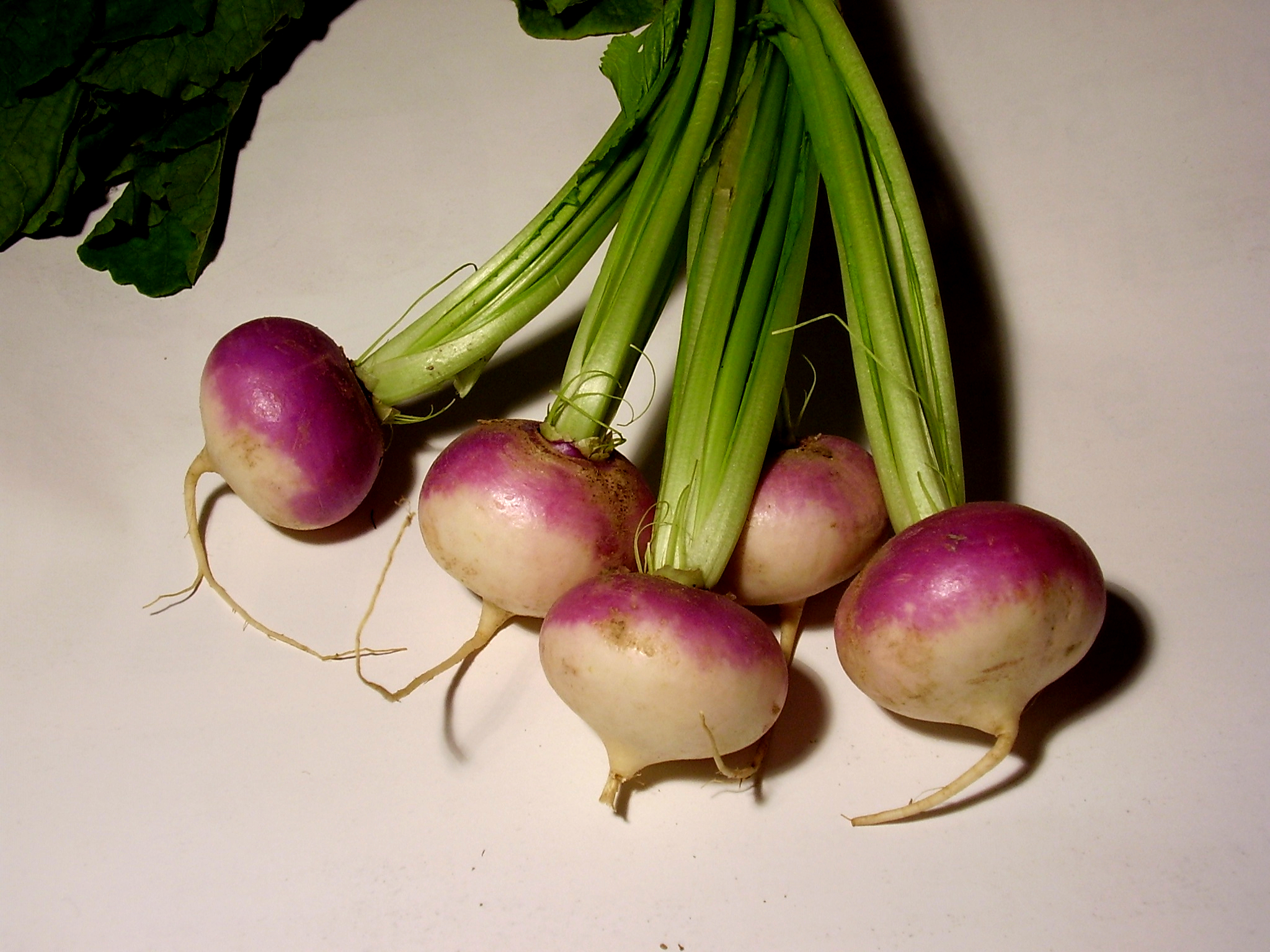
Turnip (Brassica rapa). Photo: Peter Presslein, Wikimedia Commons, CC BY-SA 3.0.
Turnips
Turnips are fast-growing cool-season brassicas valued for both their swollen roots and edible leaves. They are usually direct-sown, mature relatively quickly, and fit well into spring and autumn rotations. Tender roots depend on steady growth: heat, drought, crowding, and delayed harvest can turn them pungent, woody, or pithy.
Crop identity
Scientific name:Brassica rapa subsp. rapa
Family: Brassicaceae
Crop type: Root and leafy vegetable.
Life cycle: Biennial; harvested as an annual before flowering.
Edible portions: Enlarged root/hypocotyl and leaves (turnip greens).
Propagation: Seed, normally direct-sown.
Types and variety selection
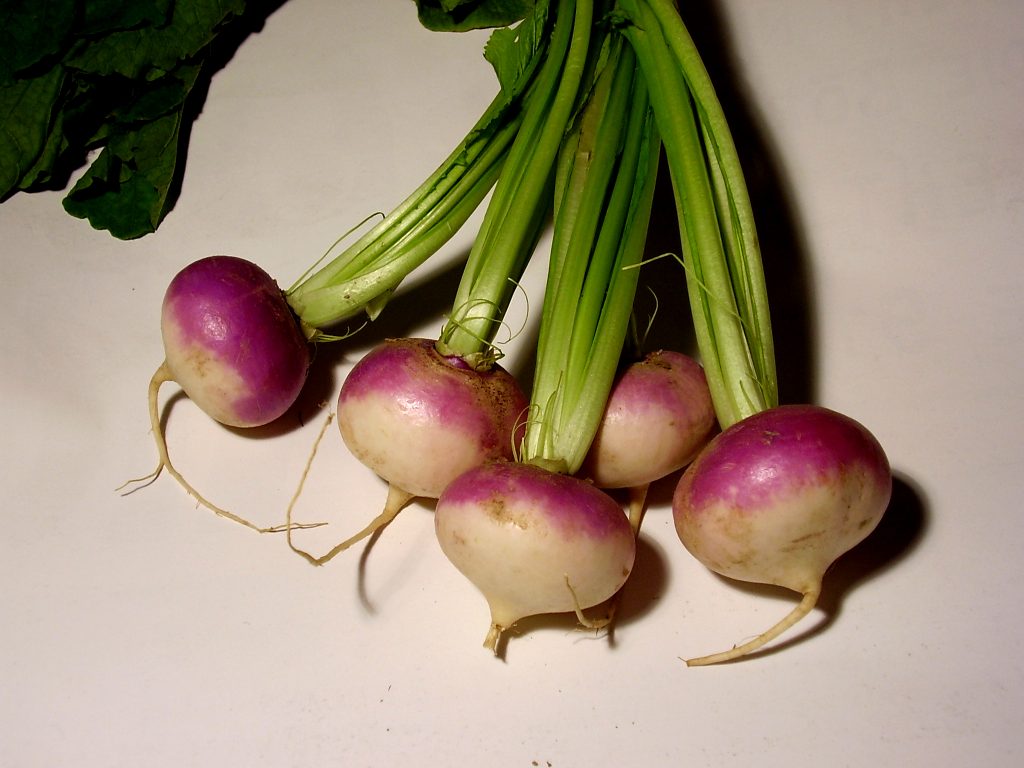
Turnips include small, tender salad types, larger cooking roots, and varieties selected mainly for greens. Root color may be white, cream, yellow, or purple-shouldered. Some cultivars mature quickly for spring harvest; others are better suited to autumn and storage. Select a variety based on whether roots, greens, or both are the priority. Rutabagas are a related but distinct crop and generally take longer to mature.
Climate, light, and soil
Turnips are cool-season crops that grow best in mild weather. They tolerate light frost, while heat can make roots strong-flavored and woody. Full sun is preferred, although light shade can help in warm climates. Prepare a loose, stone-free bed with good drainage and enough organic matter to support steady growth. Aim for even moisture; dry soil and crusting during emergence can impair root development. Soil pH and fertility should be guided by local soil testing.
Direct sowing and spacing
Direct sow turnips because transplanting can disturb root development. Sow seed about ¼–½ inch (6–12 mm) deep in a finely prepared seedbed. Thin seedlings once they are large enough to handle, leaving roughly 2–4 inches (5–10 cm) between plants for small roots; larger-root cultivars may need more space. Rows commonly range from 12–18 inches (30–45 cm) apart, adjusted for tools and bed width. For greens-only production, plants can be closer together. Succession sowing extends harvest rather than planting the entire bed at once.
Care and maintenance
Keep the seedbed moist until emergence and maintain even soil moisture as roots enlarge. Mulch can moderate soil temperature and conserve water after seedlings establish. Weed shallowly because turnip roots develop near the surface. Avoid heavy nitrogen applications unless a soil test indicates a need; excess foliage at the expense of root quality is undesirable. A balanced fertility program and steady growth are more important than forcing rapid growth with fertilizer.
Pests, diseases, and common problems
Turnips share pests with other brassicas, including flea beetles, cabbage root maggots, aphids, and caterpillars. Clubroot and other brassica diseases can persist in soil. Rotate turnips away from cabbage-family crops for several years where disease risk is present, remove crop residues, and use insect netting or row cover to protect young plants. Hot, dry weather and low fertility can produce small, harsh roots; irregular moisture followed by heavy rain can contribute to splitting.
Harvesting
Harvest roots when they reach the size and tenderness preferred for the cultivar, often around 2–3 inches (5–7.5 cm) across for many garden types. Smaller roots are generally milder and more tender. Do not leave roots in warm weather well past their useful size. Greens can be cut young, but if roots are the main goal, avoid removing most of the plant’s foliage. Loosen soil before pulling to prevent breakage.
Storage and preservation
Remove greens from roots soon after harvest and store them separately; leaves lose moisture quickly. Refrigerate roots in a cool, humid environment and use them promptly because turnips do not keep as long as many storage roots. Some later varieties can be held in cold, humid root-cellar conditions for longer, but cultivar and harvest maturity matter. Turnip greens can be blanched and frozen. For canning, use only tested pressure-canning directions from an authoritative food-preservation source.
Growing in different spaces
Turnips are well suited to small beds, raised beds, and succession planting in gaps between slower crops. They can grow in a deep container with adequate drainage, though root size is limited by crowding and container depth. Indoor growing is most practical for microgreens or baby greens; full roots need strong light and sufficient soil depth.
Regional adaptation
Northern and short-season climates: Sow in early spring as soon as soil is workable and again for autumn. Light frosts are usually tolerated; harvest before soil freezes.
Temperate climates: Spring and late-summer sowings often produce the best roots. Avoid scheduling the main crop to mature in peak summer heat.
Hot and humid climates: Favor autumn, winter, or early-spring windows depending on local frost risk. Use insect exclusion and airflow to manage brassica pests and disease.
Hot and dry climates: Sow for the coolest season and irrigate consistently. Mulch to reduce soil crusting and moisture swings.
Mediterranean climates: Autumn and winter crops often fit the mild, wetter season; protect seedlings from heat during establishment.
High-elevation sites: Use quick-maturing cultivars and local frost data. Cold nights may be helpful, but the soil must be workable and the crop must finish before a hard freeze.
Subtropical and tropical climates: Grow during the coolest season; high temperatures can sharply reduce root quality. Greens-only cultivars may be more flexible.
Use local frost dates, soil moisture, cultivar maturity, and the expected heat during root enlargement to determine sowing windows.
Editorial status: Foundational crop profile. Growing performance, cultivar maturity, and planting windows vary by region and site. Confirm timing and pest management with local Cooperative Extension guidance.