
THE FOUNDRY CROP ENCYCLOPEDIA · GRAINS AND CEREALS · WARM-SEASON ANNUAL
Sweet Corn
Sweet corn is a warm-season form of maize grown for its tender, sugary kernels. It can be productive in a home garden, but unlike many vegetables it depends on wind pollination: planting in a compact block is essential for well-filled ears.
Crop identity
- Scientific name: Zea mays (sweet corn cultivars)
- Family: Poaceae (grass family)
- Crop type: Warm-season annual grain crop harvested immature at the milk stage.
- Life cycle: Annual.
- Edible portion: Immature ears and kernels; baby corn is harvested much earlier.
- Propagation: Seed, direct-sown after soil has warmed.
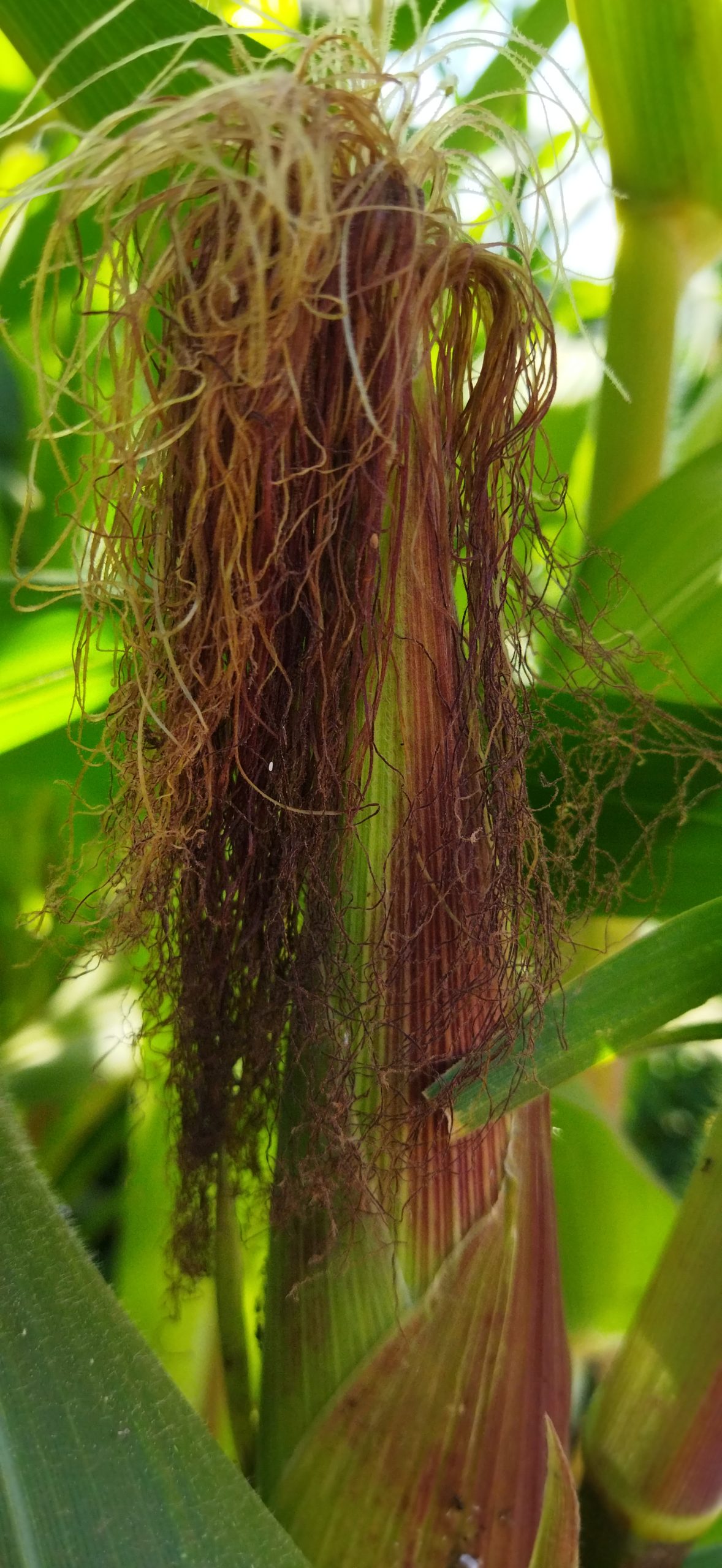
- Pollination: Wind carries pollen from tassels to the silks; each silk is connected to a potential kernel.
Types and variety selection
Sweet corn cultivars are grouped by kernel sweetness genetics and vary in flavor, tenderness, storage quality, color, plant size, and maturity. Common types include standard sugary (su), sugar-enhanced (se), synergistic (syn), and supersweet (sh2). These groups are not interchangeable: cross-pollination between certain types can reduce eating quality, so read seed-company isolation guidance before mixing cultivars.
Choose early, midseason, or late cultivars according to the length of the warm growing window. In short-season regions, maturity rating and local trial results are especially important. For a longer harvest, use cultivars with different maturity dates or make successive plantings of the same compatible type.
Climate, light, and soil
- Light: Full sun; strong direct light supports sturdy growth and ear development.
- Temperature: A frost-tender warm-season crop. Germination and emergence are more reliable in warm soil; many guides use about 60°F (16°C) as a practical threshold, while supersweet types often need warmer soil. Follow the cultivar supplier’s instructions.
- Soil: Fertile, well-drained soil with good structure. A soil test helps determine pH and nutrient needs.
- Water: Consistent moisture is especially important during tasseling, silking, pollination, and ear fill. Drought at these stages can cause poorly filled ears.
- Fertility: Corn has a relatively high nitrogen requirement. Apply nutrients based on a soil test and local guidance; avoid excessive fertilizer runoff.
Planting and spacing
Direct-sow after frost danger has passed and soil is warm enough for the cultivar. Corn is not well suited to transplanting in most home gardens because seedlings establish quickly and their roots are easily disturbed.
- Prepare a weed-free bed with good fertility and drainage.
- Sow seed about 1 inch deep, adjusting for soil texture and the seed company’s instructions.
- Common home-garden spacing is roughly 8–12 inches between plants and 24–36 inches between rows, but cultivar size and intensive systems may require adjustments.
- Plant at least three or four short rows side by side, rather than one or two long rows. A block improves the chance that pollen reaches the silks.
- For a longer harvest, stagger sowings by roughly 10–14 days where the remaining season allows, or plant early-, mid-, and late-maturing cultivars.
Care, water, and fertility
Control weeds while plants are small because corn competes poorly during early establishment. Cultivate shallowly to avoid damaging roots. Side-dressing nitrogen may be appropriate when plants are actively growing, but rates should follow soil-test results and local extension recommendations. Keep moisture steady, particularly as tassels emerge and silks develop. Corn generally does not need its side shoots removed; routine sucker removal is not recommended by many extension services.
Pollination and isolation
Each kernel forms only when pollen reaches its corresponding silk. Planting in a block of several rows is one of the most important steps for good ear fill. Different corn types readily cross-pollinate. Field corn, popcorn, ornamental corn, and some sweet-corn genetic types can affect kernel quality when they shed pollen onto one another. Maintain the distance or timing isolation recommended for the exact types being grown. Where garden space is limited, growing one type at a time or separating tasseling periods may be more practical than trying to isolate by distance.
Pests, diseases, and common problems
Common problems include corn earworm, European corn borer in affected regions, armyworms, Japanese beetles, raccoons, birds, seedling pests, rust, and smut. Poorly filled ears often point to incomplete pollination, heat or drought stress during silking, or a planting layout that is too narrow. Use locally appropriate crop rotation, sanitation, resistant cultivars where available, timely harvest, and integrated pest management. Pest pressure differs widely by region.
Harvest and storage
Sweet corn is ready when husks are green and full, silks have browned and dried, and kernels are plump. Pierce a kernel with a fingernail: milky juice indicates the milk stage; clear liquid means it is immature, while little or no liquid means quality is declining. Harvest promptly because sugars begin converting to starch after picking. Cool ears quickly and refrigerate or process soon after harvest. For freezing or canning, use tested food-preservation instructions; do not improvise processing times.
Growing in different spaces
On acreage, corn can be planted in larger blocks with room for rotation and access. In a suburban garden, a compact block of at least several short rows is more reliable than a decorative single row; dedicate enough space to pollination. Containers and balconies are generally poor choices for full-size sweet corn because the crop needs a block of plants, substantial root volume, and wind exposure for pollination. Baby corn may be more manageable in a small plot, but still requires suitable spacing and pollination management.
Regional adaptation: warmth, water, and growing-season length
- Northern and short-season climates: Select early cultivars, wait for adequate soil warmth, and calculate the remaining season from the cultivar’s maturity rating. Cold soil can delay emergence and reduce stand uniformity.
- Temperate climates: Succession plantings can extend harvest, provided each sowing has enough warm days to mature before fall cold.
- Hot and humid climates: Heat can speed development but also increase stress and pest pressure. Keep water consistent through silking and choose cultivars with locally proven disease and insect performance.
- Hot and dry climates: Irrigation is critical at tasseling, silking, and ear fill. Hot, dry winds and water stress can interfere with pollination and kernel development.
- Mediterranean climates: Use the warm growing season but plan around dry summers, water supply, and any cool coastal influence. Keep irrigation reliable during reproduction.
- High-elevation sites: Cold nights, cool soil, wind, and a short frost-free period can delay development. Use early cultivars and warm microclimates; elevation must be assessed separately from latitude.
- Subtropical and tropical climates: Select cultivars adapted to local heat, humidity, and rainfall patterns. Avoid planting during periods of severe water stress or weather that disrupts pollen shed and silk receptivity.
Do not rely on a fixed state planting date. Check soil temperature, the cultivar’s maturity rating, local frost forecasts, and Cooperative Extension guidance before sowing.
Crop record at a glance
| Scientific name | Zea mays (sweet corn cultivars) |
|---|---|
| Family | Poaceae |
| Crop group | Warm-season annual, harvested at the milk stage |
| Propagation | Direct-sown seed |
| Pollination | Wind-pollinated; plant in blocks |
| Sun | Full sun |
| Spacing | Often 8–12 inches in-row and 24–36 inches between rows; cultivar and system dependent |
| Harvest indicator | Brown silks, full kernels, milky juice |
Sources and further reading
- University of Maryland Extension: Growing Sweet Corn in the Home Garden — planting, spacing, pollination, and harvest.
- Iowa State University Extension: Growing Sweet Corn in the Home Garden — cultivar types, isolation, and pollination.
- University of Minnesota Extension: Growing Sweet Corn in Home Gardens — block planting and cross-pollination.
- Utah State University Extension: How to Grow Sweet Corn in Your Garden — planting, watering, and succession sowing.
Editorial status: Foundational crop profile. Sweet-corn genetic types have specific isolation requirements; verify seed-company instructions and local Cooperative Extension recommendations. Timing, spacing, and pest pressure vary by cultivar and region.