
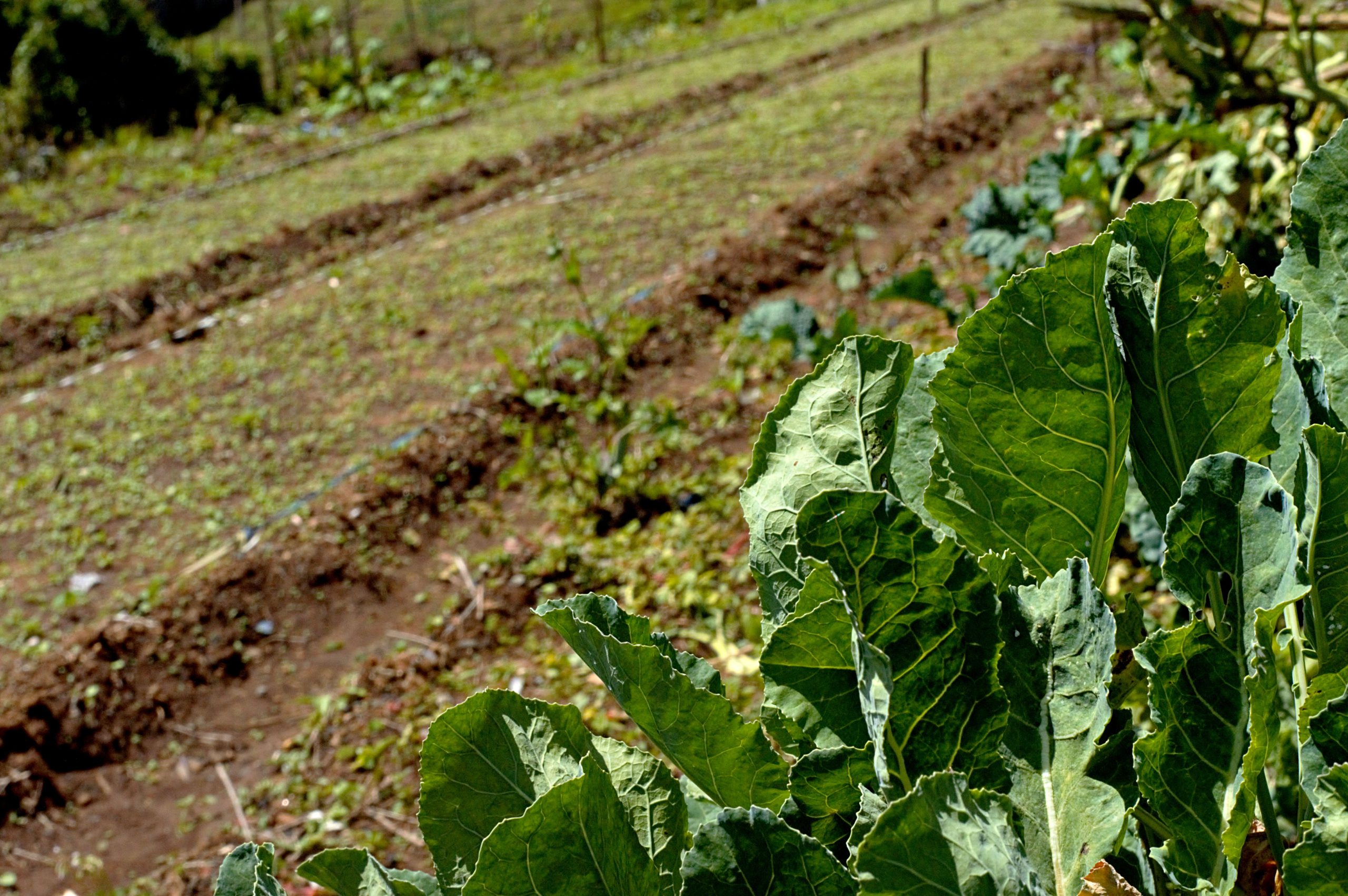
THE FOUNDRY CROP ENCYCLOPEDIA · VEGETABLES · COOL-SEASON LEAFY BIENNIAL, COMMONLY GROWN AS AN ANNUAL
Kale
Kale is a hardy leafy brassica that can provide harvests from spring through fall and, in many climates, into winter. Its tolerance of cool weather, range of leaf forms, and suitability for beds and containers make it a dependable food-garden crop.
Crop identity
- Scientific name: Brassica oleracea Acephala Group
- Family: Brassicaceae (mustard family)
- Crop type: Cool-season leafy biennial, commonly grown as an annual
- Life cycle: Biennial, normally harvested in its first year
- Edible portion: Leaves and tender shoots
- Propagation: Seed; direct sowing is generally preferred
Types and variety selection
- Curly kale: Ruffled leaves, often compact; folds can trap soil and insects.
- Lacinato or Tuscan kale: Long, dark, blistered leaves and upright growth.
- Red Russian and Siberian types: Often softer leaves and distinctive stems; cultivar backgrounds vary.
- Ornamental/edible forms: Select food-crop seed and follow normal food-garden practices.
Select varieties for maturity, leaf texture, plant size, cold tolerance, and resistance to common brassica diseases. Cultivars vary in how well they withstand hard freezes.
Climate, light, and soil
- Light: Full sun is preferred; partial shade can help during warm weather.
- Temperature: Best leaf quality generally develops in cool weather. Many varieties tolerate frost, but hardiness depends on cultivar and exposure.
- Soil: Fertile, well-drained soil with organic matter; pH around 6.0–7.5 is commonly suitable.
- Water: Maintain even moisture, especially during establishment and rapid leaf growth.
- Fertility: Moderate to high nutrient demand for sustained leaf production. Use soil tests and avoid excessive nitrogen.
Starting and planting
Kale can be direct-sown or transplanted. For an early crop, start seeds indoors about 4–6 weeks before transplanting; for fall harvest, sow in midsummer according to local days-to-maturity and first-frost timing. Direct sowing is simpler when the bed is ready and pests can be managed.
- Sow seeds about ¼–½ inch (0.6–1.3 cm) deep.
- Thin or transplant seedlings to roughly 12–18 inches (30–45 cm) apart for full-size plants; compact cultivars may be closer.
- Space rows about 18–30 inches (45–75 cm) apart, adjusting for cultivar and access.
- Harden indoor starts before transplanting and water them in well.
- Mulch after soil has warmed to conserve moisture and suppress weeds.
Care, pests, and disease
Kale is vulnerable to cabbage worms, imported cabbageworm, cabbage loopers, diamondback moth larvae, aphids, flea beetles, and cabbage root maggots. Inspect leaf undersides and growing points frequently. Insect-proof row cover can prevent many pests when installed before insects arrive. Rotate away from brassicas, remove crop residues, and avoid repeated planting in the same bed. Common diseases include black rot, Alternaria leaf spot, and clubroot; sanitation, rotation, and good drainage help reduce risk.
Harvest and storage
Begin harvesting lower leaves when large enough to use, leaving the central growing point and several healthy upper leaves. Regular picking encourages continued production. For a whole-plant harvest, cut before flowering stems become tough. Rinse leaves, dry thoroughly, and refrigerate in a breathable bag or suitable produce container. Kale can be blanched and frozen; it is also used in soups, sautés, chips, and fermented preparations. Follow tested preservation instructions.
Growing in different spaces
On acreage, plant kale in dedicated beds for repeated leaf harvest, with succession plantings to replace aging plants. In suburban gardens, a few plants can provide a steady supply and tolerate cool shoulder seasons. Compact varieties grow well in large containers with consistent watering. Indoor kale is possible under strong lighting, but full-size plants need substantial space; microgreens are a more compact indoor option.
Regional adaptation: match the crop to your conditions
There is no single national planting calendar. Use the crop’s days to maturity, local average frost dates, soil temperature, day length, seasonal rainfall, and expected heat or cold to plan sowing and harvest. Local Cooperative Extension guidance and cultivar-specific seed information should take precedence over broad regional rules.
- Northern and short-season climates: Favor appropriately early cultivars, start transplants when suitable for the crop, use succession planning carefully, and protect vulnerable plants from late spring or early fall cold.
- Temperate climates: Use spring and fall planting windows where the crop tolerates cool weather; stagger sowings when this extends harvest without exposing plants to unsuitable heat or cold.
- Hot and humid climates: Account for heat stress, high nighttime temperatures, humidity-related disease, and intense pest pressure. Favor locally proven cultivars, airflow, soil-level irrigation, and seasonal timing that avoids the harshest conditions.
- Hot and dry climates: Plan around water availability, rapid soil drying, high evaporative demand, and heat. Mulch, efficient irrigation, afternoon shade where appropriate, and locally adapted cultivars can improve reliability.
- Mediterranean climates: Mild wet seasons and dry summers may create different planting windows than continental climates. Time establishment around dependable moisture and avoid assuming summer conditions suit every crop.
- High-elevation sites: Treat elevation as a separate factor from latitude. Cold nights, shorter frost-free periods, intense sunlight, wind, slow spring soil warming, slope, and aspect can all affect performance; nearby lowland calendars may not apply.
- Subtropical and tropical climates: Heat, humidity, rainfall patterns, and sometimes day length can shift the best season. In some locations, a crop’s productive window may be the cooler or drier season rather than the local summer.
Before planting, compare the forecast and soil conditions with the crop’s actual requirements. Use frost dates as planning estimates, not guarantees, and adjust for your garden’s microclimate, drainage, exposure, and available protection.
Crop record at a glance
- Cool-season leafy biennial, commonly grown as an annual
- Direct-sown or transplanted according to crop and season
- Use succession planting to extend harvest where appropriate
- Match cultivar, spacing, and container depth to the intended harvest
- Cool-season performance; heat and day length can alter timing
Sources and further reading
- Colorado State University Extension: Vegetable Gardening in the Mountains
- University of Minnesota Extension: Planting the Vegetable Garden
- University of Minnesota Extension: Climate Resilience Resources
Editorial status: Foundational crop profile. Timing, spacing, cultivar performance, and pest pressure vary by region and growing system. Local Cooperative Extension recommendations and current seed-packet information should guide final decisions.