
THE FOUNDRY CROP ENCYCLOPEDIA · CUCURBITS · WARM-SEASON CROPS
Cucumber — Growing Guide & Crop Profile
Cucumbers are warm-season vines grown for fresh eating, salads, and pickling. They can sprawl across a garden bed or climb a sturdy trellis, making them adaptable to acreage gardens, backyard beds, and large containers when water, warmth, and pollination needs are met.
Crop identity
- Scientific name: Cucumis sativus
- Family: Cucurbitaceae (gourd family)
- Crop type: Warm-season fruiting vegetable; botanically a fruit
- Life cycle: Annual
- Edible portion: Immature fruit; seeds are generally eaten with the fruit in common cultivars
- Propagation: Seed, usually direct-sown; transplants are possible when handled carefully
- Pollination: Many traditional varieties require insect pollination; some greenhouse and parthenocarpic cultivars set fruit without pollination
Types and variety selection
- Slicing cucumbers: Selected for fresh eating, generally with tender skin and mild flavor.
- Pickling cucumbers: Often shorter, with fruit shape and texture suited to pickling. Harvest size depends on the intended pickle style.
- Burpless or thin-skinned types: Market descriptions vary; compare cultivar-specific characteristics rather than relying on the label alone.
- Seedless/parthenocarpic types: Can set fruit without pollination and are useful in protected growing systems. Some should be isolated from pollinating cucumber varieties to avoid seeded fruit, depending on cultivar.
- Bush and compact types: Shorter growth habit suited to smaller beds and large containers.
- Vining types: Spread widely or climb supports and generally need more space or a strong trellis.
Choose varieties for local disease pressure, days to maturity, fruit use, vine length, and whether pollinators will have access. Resistance codes on seed packets refer to specific diseases; they do not mean a plant is immune to every problem.
Climate and site requirements
- Temperature: Frost-sensitive warm-season crop. Plant after frost danger has passed and soil has warmed. Cold soil slows growth and can cause seed decay.
- Light: Full sun is preferred, generally six or more hours of direct light.
- Soil: Loose, fertile, well-drained soil with organic matter. Avoid waterlogged beds.
- Water: Regular, even moisture is important during flowering and fruit enlargement. Avoid severe dry-down followed by heavy watering.
- Airflow: Good spacing and trellising can help foliage dry and make pests easier to spot.
When and how to plant
Direct-sow cucumber seed after the soil has warmed and frost danger has passed. Many gardeners wait until soil is at least about 60°F (16°C), with faster, more reliable emergence in warmer soil. In short-season areas, start seeds indoors in individual pots only a few weeks before transplanting; cucumbers dislike root disturbance and overgrown transplants.
- Prepare a sunny bed with drainage and mature compost or soil-test-directed amendments.
- Sow seeds at the packet depth, commonly around ½–1 inch, in hills or rows according to the cultivar.
- Thin to the strongest seedlings once established, following the spacing for the variety and training method.
- Install trellises before vines begin running if growing vertically.
- Water gently and keep the seed zone moist until emergence.
- Use row cover early for pest exclusion if needed, but remove it when flowers require access by pollinating insects unless using a parthenocarpic variety.
Spacing, trellising, and care
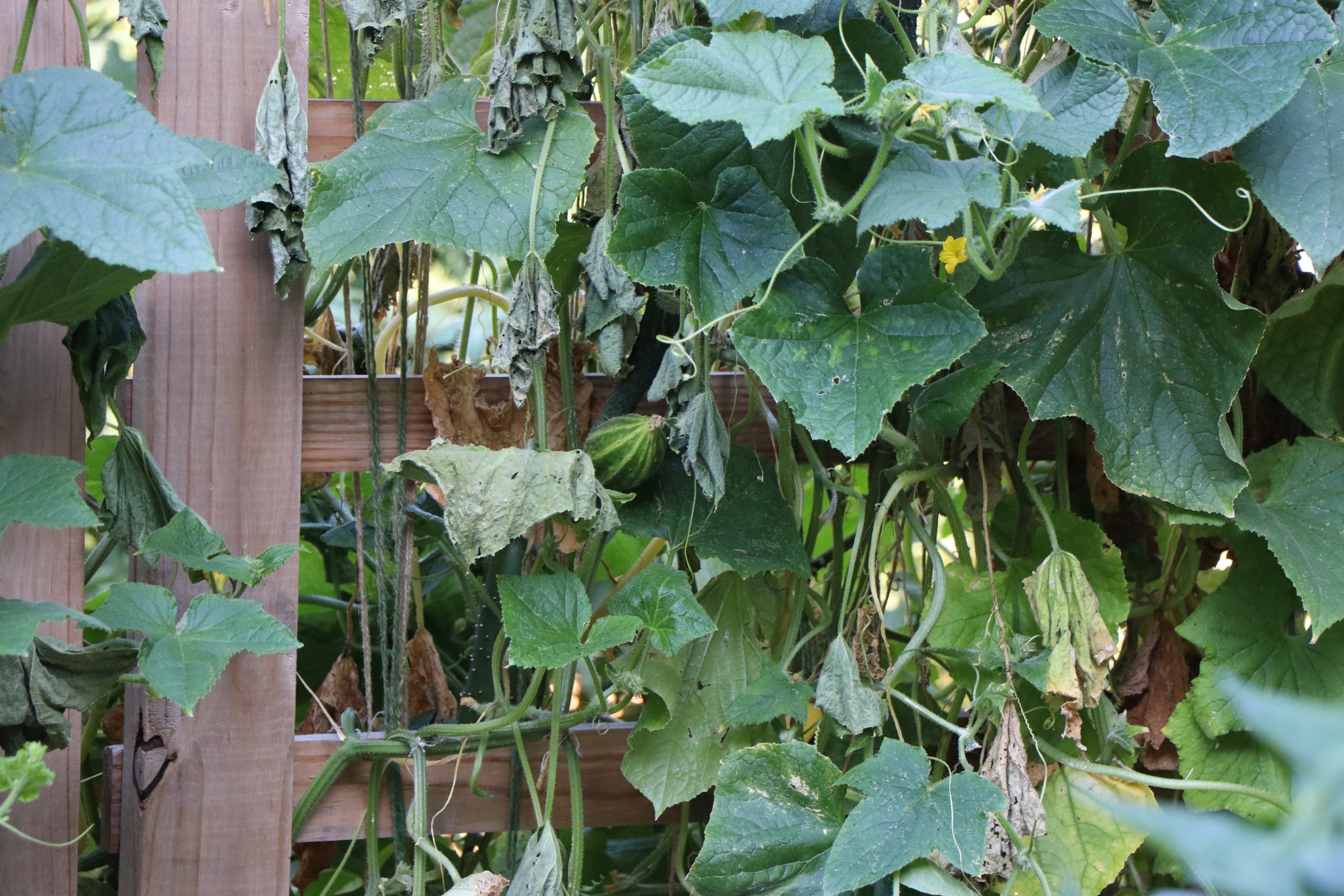
Spacing depends heavily on whether vines sprawl or climb. Ground-grown plants need room to run; trellised plants can be closer but still need airflow and access for harvest. Use a strong support anchored against wind and the weight of mature vines and fruit. Train tendrils gently while young rather than forcing brittle stems later.
Keep moisture consistent, especially once fruit begins enlarging. Drip irrigation or watering at soil level helps reduce leaf wetness. Mulch can conserve moisture and reduce soil splash after the soil warms. Avoid excessive nitrogen, which can produce abundant vines and leaves without proportionate fruiting. Use soil-test results to guide fertility.
Pollination and fruit set
Traditional cucumber plants commonly produce separate male and female flowers on the same plant. Bees and other insects transfer pollen; the small immature cucumber is visible behind a female flower. Poor pollination can lead to misshapen or aborted fruit. Avoid insecticide applications during bloom and preserve pollinator access. Parthenocarpic cultivars are bred to set fruit without pollination and are often preferred for greenhouses or covered growing spaces.
Pests, diseases, and common problems
Common problems include cucumber beetles, aphids, spider mites, squash bugs in some regions, powdery mildew, downy mildew, bacterial wilt, and viruses. Rotate cucurbits where practical, remove crop debris, use resistant varieties, monitor leaf undersides, and identify the cause before selecting a treatment. Row covers can protect young plants from beetles, but flowering plants that need insect pollination must be uncovered or managed according to cultivar type.
Harvest and storage
Harvest fruit at the size recommended for the cultivar and intended use. Pick slicing cucumbers before they become oversized, yellow, or seedy; pickling types may be harvested small and frequently. Use scissors or pruners when needed to avoid tearing vines. Frequent harvest encourages continued production. Handle fruit gently, keep it cool, and refrigerate according to the intended storage period; cucumbers are chilling-sensitive and can suffer quality loss if stored too cold for too long.
For pickling, use tested recipes and appropriate varieties and follow food-safety directions precisely. Do not assume every cucumber or brine method is suitable for shelf-stable canning.
Growing in different spaces
Acreage and larger gardens
Plan rows or trellises for irrigation, crop rotation, pest scouting, and repeated picking. Select cultivars with maturity dates that fit the local frost-free window. Stagger plantings only where the season is long enough and pest pressure is manageable.
Suburban backyard beds
A trellised cucumber can save bed space and keep fruit clean, but the support must be strong and positioned so the vine does not shade neighboring crops. A compact bush variety may be easier in a small bed.
Containers and balconies
Choose a compact cultivar and a large container with drainage and sufficient root volume. Provide a securely anchored trellis and check moisture frequently; containers can dry rapidly in sun and wind. Consider mature vine weight and balcony wind exposure before installing a tall support.
Indoor growing
Cucumbers can be grown in controlled indoor or greenhouse systems, especially parthenocarpic cultivars, but require strong lighting, warm conditions, root volume, airflow, and training. A typical windowsill is not enough for productive mature plants.
Regional adaptation: match the crop to your conditions
There is no single national planting calendar. Use the crop’s days to maturity, local average frost dates, soil temperature, day length, seasonal rainfall, and expected heat or cold to plan sowing and harvest. Local Cooperative Extension guidance and cultivar-specific seed information should take precedence over broad regional rules.
- Northern and short-season climates: Favor appropriately early cultivars, start transplants when suitable for the crop, use succession planning carefully, and protect vulnerable plants from late spring or early fall cold.
- Temperate climates: Use spring and fall planting windows where the crop tolerates cool weather; stagger sowings when this extends harvest without exposing plants to unsuitable heat or cold.
- Hot and humid climates: Account for heat stress, high nighttime temperatures, humidity-related disease, and intense pest pressure. Favor locally proven cultivars, airflow, soil-level irrigation, and seasonal timing that avoids the harshest conditions.
- Hot and dry climates: Plan around water availability, rapid soil drying, high evaporative demand, and heat. Mulch, efficient irrigation, afternoon shade where appropriate, and locally adapted cultivars can improve reliability.
- Mediterranean climates: Mild wet seasons and dry summers may create different planting windows than continental climates. Time establishment around dependable moisture and avoid assuming summer conditions suit every crop.
- High-elevation sites: Treat elevation as a separate factor from latitude. Cold nights, shorter frost-free periods, intense sunlight, wind, slow spring soil warming, slope, and aspect can all affect performance; nearby lowland calendars may not apply.
- Subtropical and tropical climates: Heat, humidity, rainfall patterns, and sometimes day length can shift the best season. In some locations, a crop’s productive window may be the cooler or drier season rather than the local summer.
Before planting, compare the forecast and soil conditions with the crop’s actual requirements. Use frost dates as planning estimates, not guarantees, and adjust for your garden’s microclimate, drainage, exposure, and available protection.
Crop record at a glance
| Category | Warm-season fruiting crop |
|---|---|
| Scientific name | Cucumis sativus |
| Planting method | Usually direct-sown after soil warms |
| Typical maturity | Often about 50–70 days; cultivar and conditions vary |
| Sun | Full sun |
| Support | Optional for sprawling types; useful for vining types |
| Container suitability | Good with compact cultivars, large containers, and sturdy support |
| Harvest use | Fresh eating and tested pickling recipes |
Sources and further reading
- University of Minnesota Extension: Growing Cucumbers — planting, care, pests, and harvest.
- Utah State University Extension: Cucumbers in the Garden — variety choice, planting, irrigation, and support.
- University of Illinois Extension: Cucumbers — home garden production and common problems.
- Colorado State University Extension: Vegetable Garden Hints — regional vegetable garden guidance.
Editorial status: Foundational crop profile. Variety-specific pollination, spacing, harvest size, and disease resistance should be checked against the seed supplier and local Extension guidance.