
THE FOUNDRY CROP ENCYCLOPEDIA · APIACEAE (CARROT AND PARSLEY FAMILY) · COOL-SEASON ROOT VEGETABLE
Celeriac
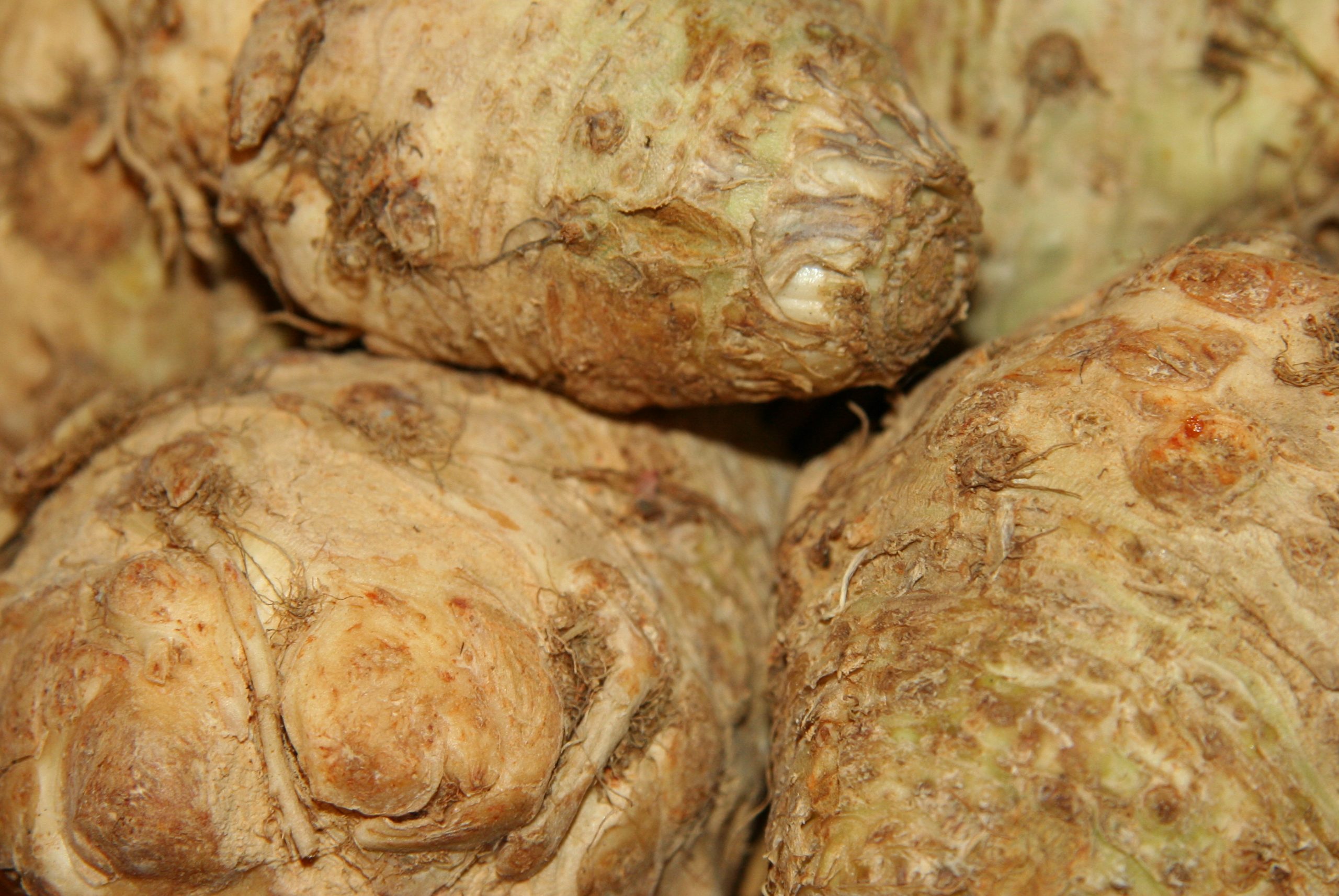
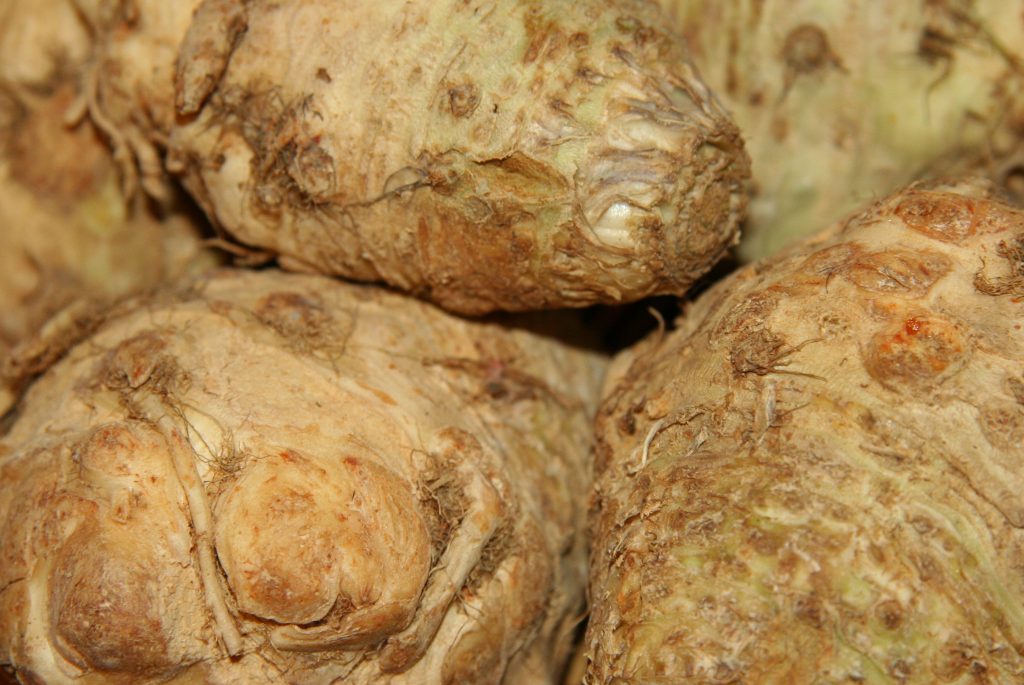
Celeriac—also called celery root—is grown for its swollen, knobbly stem base rather than for crisp stalks. Beneath its rough exterior is firm, aromatic flesh with a mild celery-like flavor. It is a slow, steady crop that rewards fertile soil, reliable moisture, and a long cool growing window.
Crop identity
- Scientific name: Apium graveolens Rapaceum Group (also written var. rapaceum)
- Family: Apiaceae
- Crop type: Cool-season root and stem-base vegetable.
- Life cycle: Biennial; generally grown as an annual for the enlarged edible base.
- Edible portion: Enlarged stem base and smaller roots after trimming; leaves can flavor stocks.
- Propagation: Seed, usually started indoors and transplanted.
Types and variety selection
Celeriac varieties vary in root shape, smoothness, size, maturity, internal color, and resistance to hollowing or disease. Choose cultivars suited to the length of the local growing season. Smooth-rooted types are easier to clean and prepare, while locally proven cultivars are often the safest choice where summers are hot or seasons are short. Celeriac is not the same crop as stalk celery, although both belong to the same species complex.
Climate, light, and soil
Celeriac performs best in cool to mild conditions and needs a long period of uninterrupted growth. Full sun is preferred, with light afternoon shade useful where late-season heat is intense. Use fertile, deep, moisture-retentive soil that drains freely; compacted, stony soil can deform the developing base. A slightly acidic to near-neutral soil is suitable. Maintain even moisture: drought followed by heavy watering can interrupt growth and reduce root quality. Avoid overfeeding with nitrogen, which can favor foliage over the enlarged base.
Starting seeds and planting
Start seed indoors roughly 8–10 weeks before the locally suitable transplant window. Seeds are small and slow to germinate; surface sow or cover only lightly, keep the medium evenly moist, and provide bright light after emergence. Germination can take two to three weeks or longer. Grow sturdy transplants without allowing them to become root-bound. Harden them gradually and transplant after severe chilling risk has passed and soil is warming. Space plants about 6–8 inches (15–20 cm) apart in rows roughly 18–24 inches (45–60 cm) apart; adjust to cultivar and bed layout. Do not bury the crown deeply.
Care and maintenance
Keep growth steady from transplanting through root enlargement. Mulch to conserve moisture and suppress weeds, but keep mulch clear of the crown. Water deeply and consistently, especially during dry spells and as the base swells. Remove weeds while small; avoid deep cultivation near the plant. Do not hill soil over the crown as if blanching celery—the exposed upper portion of the celeriac base is part of the harvestable structure. Crop rotation helps reduce the buildup of celery-family pests and soilborne disease.
Pests, diseases, and common problems
Potential problems include celery leaf blights, leaf spots, aphids, leafminers, slugs, and root damage from uneven moisture or compacted soil. Good airflow, clean transplants, crop rotation, and watering at soil level can reduce some disease pressure. Irregular growth, drought, or prolonged heat can contribute to small, rough, hollow, or poorly formed bases. Diagnose local problems before choosing a treatment; pest pressure varies substantially by region.
Harvesting
Harvest when the swollen base reaches a useful size for the variety and intended use; many gardeners begin lifting roots around 3–4 inches (7.5–10 cm) across, though larger roots can remain usable. Loosen the soil with a fork and lift carefully. Celeriac can tolerate cool weather and flavor often improves after light frost, but harvest before the soil freezes solid. In mild-winter areas, mulch can extend in-ground harvest; in colder locations, lift before prolonged hard freezes.
Storage and preservation
Trim leaves and fine roots, leaving the main base intact. Brush off loose soil and store unwashed roots in cold, humid conditions; avoid bruising or cutting the skin before storage. Iowa State Extension describes storage near 32–35°F (0–2°C) and high relative humidity, with several months possible under good conditions. Refrigerate cut pieces promptly. Celeriac can be blanched and frozen for cooked dishes; use tested food-preservation guidance for any canning or pickling.
Growing in different spaces
Celeriac is best suited to a garden bed or raised bed with enough depth for steady root development. It can be grown in a large, deep container, but container soil dries quickly and root size may be limited. It is not a practical indoor crop for full-sized roots unless strong light, substantial container volume, and a long cool growing period are available.
Regional adaptation
- Northern and short-season climates: Start indoors early, select early or locally tested cultivars, and transplant only when young plants will not be chilled for prolonged periods. Plan harvest before the ground freezes.
- Temperate climates: Use a spring transplant for autumn harvest; keep moisture even through summer and allow the crop to mature as temperatures cool.
- Hot and humid climates: Grow during the coolest workable season, use disease-resistant cultivars where available, and prioritize airflow and soil-level irrigation.
- Hot and dry climates: Reliable irrigation and mulch are essential. Light afternoon shade can reduce stress, but do not let plants repeatedly wilt.
- Mediterranean climates: A cool-season schedule with dependable irrigation is usually more practical than attempting to mature the crop through peak summer heat.
- High-elevation sites: Elevation changes night temperatures and frost timing independently of latitude. Use protected transplants, warm enough soil, and a cultivar whose maturity fits the actual frost-free window.
- Subtropical and tropical climates: Trial celeriac in the coolest season and choose locally proven varieties; persistent warmth can limit root quality.
Set timing from local frost estimates, soil temperature, night temperatures, and cultivar maturity—not a universal calendar date.
Crop record at a glance
| Scientific name | Apium graveolens Rapaceum Group |
|---|---|
| Family | Apiaceae |
| Crop group | Cool-season root vegetable |
| Propagation | Seed; normally transplanted |
| Typical spacing | 6–8 in (15–20 cm) between plants |
| Harvest indicator | Firm enlarged base of useful size |
| Key requirement | Long, steady growth with consistent moisture |
Sources and further reading
- University of Arkansas Division of Agriculture: Celeriac — propagation, spacing, moisture, and harvest.
- UC Master Gardener Program of Sonoma County: Celeriac — temperature, seed starting, and microclimate notes.
- Iowa State University Extension: Storing Winter Storage Vegetables — storage temperature and humidity.
- Oregon State University Extension: Winter Vegetable Production — celeriac in cool-season systems.
Editorial status: Foundational crop profile. Growing performance, cultivar maturity, and planting windows vary by region and site. Confirm timing and pest management with local Cooperative Extension guidance.