THE FOUNDRY CROP ENCYCLOPEDIA · APIACEAE (CARROT AND PARSLEY FAMILY) · COOL-SEASON STORAGE ROOT
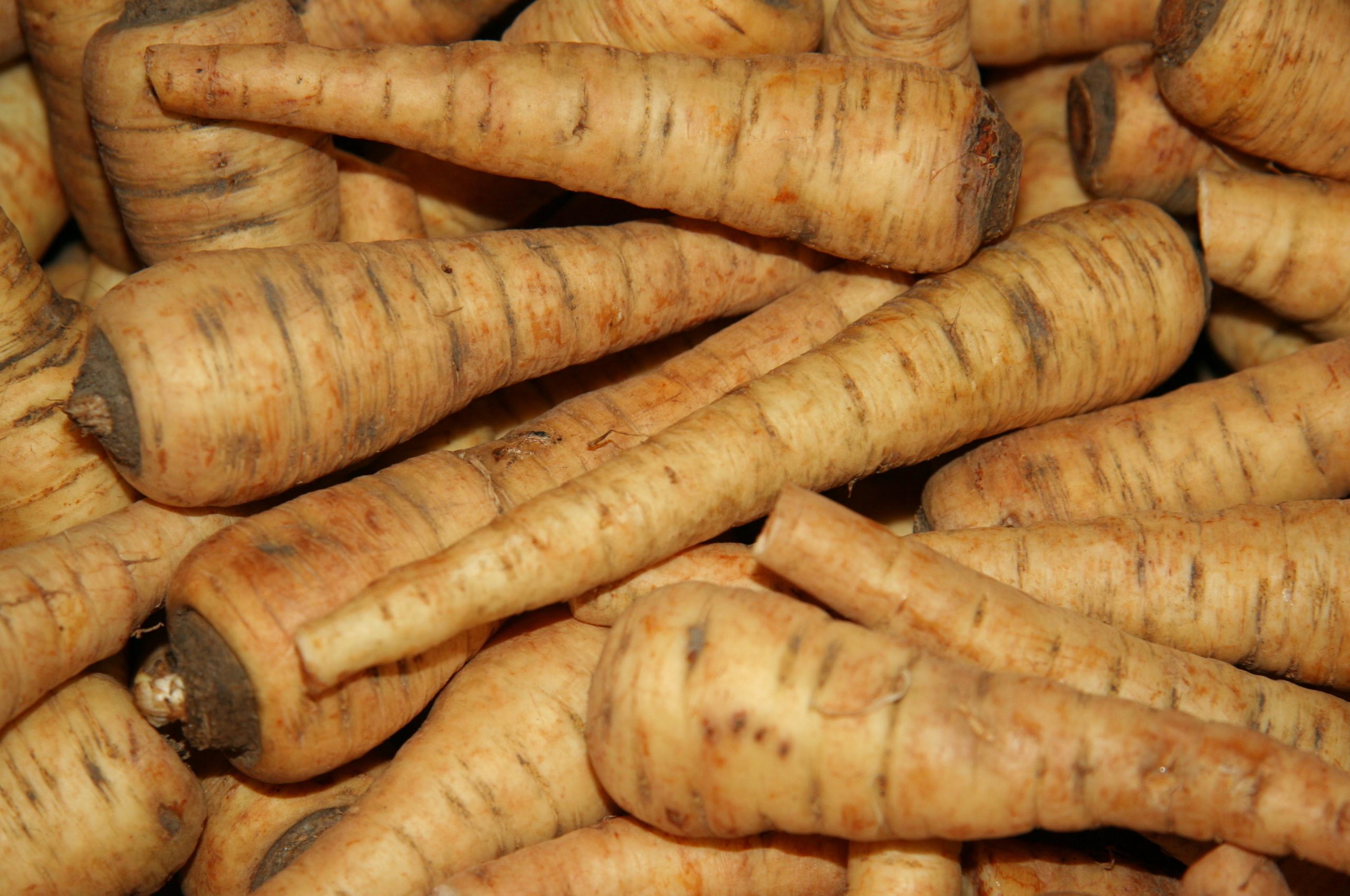
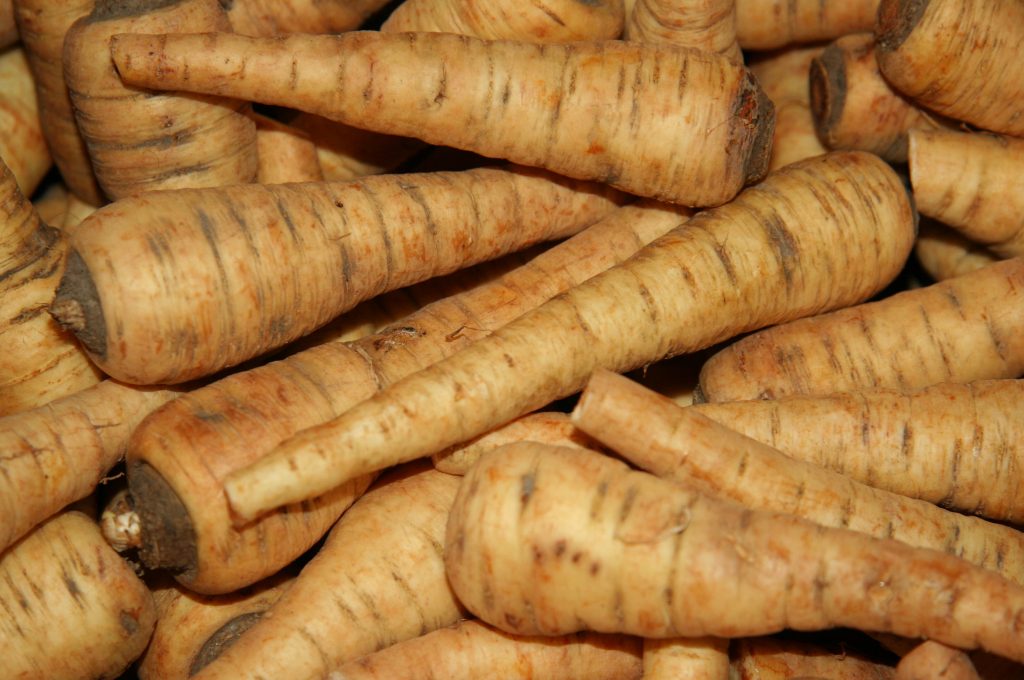
Parsnips. Photo: Jonathunder, Wikimedia Commons, CC BY-SA 3.0.
Parsnips
Parsnips are hardy biennial root vegetables grown for long, cream-colored taproots with a sweet, earthy flavor. They need a long season and patience: seed germination is slow and can be uneven, while root quality improves after cool autumn weather. Deep, stone-free soil and fresh seed are the foundation of a successful crop.
Crop identity
Scientific name:Pastinaca sativa
Family: Apiaceae
Crop type: Cool-season storage root.
Life cycle: Biennial; harvested in the first year for roots.
Edible portion: Enlarged taproot.
Propagation: Seed, direct-sown in place.
Types and variety selection
Parsnip cultivars differ in root length, shoulder width, shape, maturity, flavor, and suitability for heavier soils. Long-rooted types need deep, stone-free soil; shorter or stump-rooted types may be more practical in shallower beds. Use fresh seed from a reliable supplier. Parsnip seed loses viability relatively quickly, so old packets are a common cause of poor stands.
Climate, light, and soil
Parsnips prefer cool weather and a long growing period. They tolerate frost and can remain in the ground into winter where soil can still be dug. Full sun is ideal. Soil should be deep, loose, well drained, and free of stones, hardpan, or fresh manure that can cause forked roots. Work in mature compost well before planting if organic matter is needed. Avoid excess nitrogen and excessive disturbance of the developing taproot.
Direct sowing and germination
Sow directly into the final bed; parsnips do not transplant well because the taproot is easily damaged. Plant fresh seed about ½ inch (1–1.5 cm) deep in moist soil. Germination may take two to four weeks, sometimes longer in cool conditions. Keep the seed zone consistently moist and prevent a surface crust from forming. Mark rows clearly because emergence is slow. Some gardeners sow a few radish seeds in the row as temporary markers; remove or harvest them before they compete. Thin seedlings to roughly 3–6 inches (7.5–15 cm) apart depending on cultivar and desired root size.
Care and maintenance
Keep the bed weed-free while seedlings establish; parsnips are slow to compete with weeds early in growth. Water during prolonged dry spells, especially before roots are established. Once plants are growing strongly, they need less intensive attention, but avoid severe drought. Mulch can conserve moisture and moderate soil temperature. Do not fork or cultivate deeply near the row. Rotate crops and remove diseased residues after harvest.
Pests, diseases, and safe handling
Potential problems include parsnip canker, leaf spots, root rots, leafhoppers, and parsnip root maggots. Use rotation, healthy seed, well-drained soil, and row cover where local pest pressure warrants it. Parsnip foliage contains furanocoumarin compounds that can cause phytophotodermatitis in some people: skin contact followed by sunlight can result in irritation or blistering. Wear gloves, long sleeves, and trousers when handling foliage, especially when plants are wet or being cut back.
Harvesting
Parsnips can be lifted once roots reach useful size, but flavor often becomes sweeter after exposure to cold autumn temperatures. Loosen the soil deeply with a garden fork and lift carefully to avoid snapping the taproots. In regions with workable winter soil, mulch the bed and harvest as needed. Do not leave roots until after spring growth resumes; quality declines as the plant prepares to flower. In very cold climates, harvest before the soil freezes solid.
Storage and preservation
Trim foliage close to the crown without cutting into the root. Brush off soil rather than washing roots intended for longer storage. Store in cold, humid conditions; Iowa State Extension describes 32–35°F (0–2°C) and 90–95% relative humidity, with several months possible under suitable conditions. Keep parsnips away from ethylene-producing fruit such as apples and pears, which can contribute to bitterness. Parsnips can be blanched and frozen for cooked dishes. Follow tested preservation procedures.
Growing in different spaces
Parsnips are best grown in a deep, prepared garden bed or raised bed with ample root depth. They are a poor choice for shallow containers; a deep container can work if it has enough vertical space and loose growing medium. Their slow emergence makes them less suited to short indoor cycles, though baby roots can be harvested earlier. Indoor full-size production requires substantial depth, strong light, and a long growing period.
Regional adaptation
Northern and short-season climates: Sow early in spring as soon as soil is workable, using fresh seed and a quick or locally proven cultivar. Plan for autumn harvest before the ground becomes impossible to dig.
Temperate climates: Spring sowing followed by autumn and winter harvest is the standard approach. Mulch can extend the harvest window.
Hot and humid climates: Parsnips are challenging where warm weather persists. Sow for the coolest long-season window and prioritize deep, well-drained soil and disease prevention.
Hot and dry climates: Use a cool-season schedule, maintain moisture during germination, and mulch to reduce drying and soil crusting.
Mediterranean climates: Autumn sowing may work where winters are mild and summers dry; ensure seedlings establish before cold weather and roots mature before heat returns.
High-elevation sites: A short frost-free period may limit root size. Sow as early as soil conditions allow, choose shorter-season cultivars, and use mulch for late harvest without allowing the soil to freeze solid.
Subtropical and tropical climates: Parsnips are generally difficult in warm winters. Trial only during the coolest extended period and use local cultivar experience rather than assuming standard temperate performance.
Because parsnips germinate slowly and need a long season, calculate the usable growing window from soil readiness through expected autumn freezes—not simply the last spring frost date.
Crop record at a glance
Scientific name
Pastinaca sativa
Family
Apiaceae
Crop group
Cool-season storage root
Propagation
Fresh seed, direct-sown
Typical spacing
3–6 in (7.5–15 cm) between plants
Harvest indicator
Full-sized roots; flavor often improves after frost
Editorial status: Foundational crop profile. Growing performance, cultivar maturity, and planting windows vary by region and site. Confirm timing and pest management with local Cooperative Extension guidance.