
THE FOUNDRY CROP ENCYCLOPEDIA · VEGETABLES · COOL-SEASON ROOT VEGETABLE
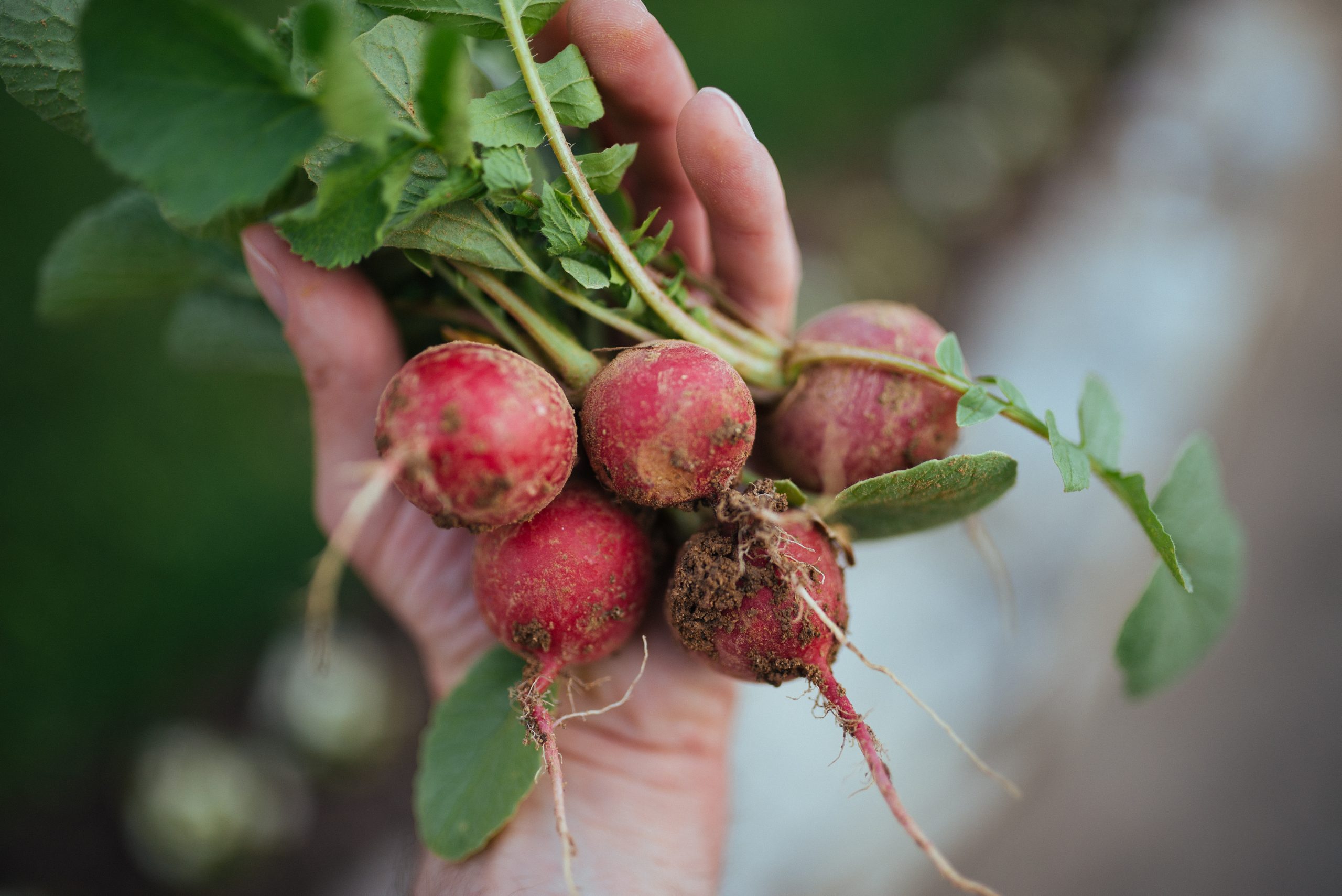
Radishes
Radishes are among the quickest vegetables to grow. Their crisp roots and edible leaves make them excellent succession crops for spring and fall gardens, raised beds, and containers. Good flavor depends on cool conditions, steady moisture, and timely harvest.
Crop identity
- Scientific name: Raphanus sativus
- Family: Brassicaceae (mustard family)
- Crop type: Cool-season root vegetable
- Life cycle: Annual
- Edible portion: Enlarged root and leaves
- Propagation: Seed; direct sowing is generally preferred
Types and cultivar selection
- Spring salad radishes: Small round or cylindrical roots, often ready in 3–5 weeks in favorable conditions.
- Winter radishes: Larger roots such as daikon, black Spanish, and watermelon types; generally need longer to mature.
- Daikon: Long white roots used fresh, cooked, pickled, or fermented; deep loose soil helps prevent forking.
- Colored types: Red, pink, purple, white, green, and bicolored cultivars offer different shapes and flavor.
Choose a cultivar by season and root size. Spring types can bolt or become pithy in hot weather; winter types are usually sown later for fall harvest.
Climate, light, and soil
- Light: Full sun in cool weather; light afternoon shade can help in warmer conditions.
- Temperature: Cool-season crop, tolerant of cold. Heat and long days can trigger bolting or poor root quality.
- Soil: Loose, well-drained soil. Loosen at least 6 inches (15 cm) for small types and deeper for daikon.
- Water: Keep moisture even. Drought can make roots tough or excessively hot; irregular watering can cause splitting.
- Fertility: Moderate fertility; excessive nitrogen can favor leaves over roots.
Sowing and succession planting
Direct-sow as soon as soil is workable in spring. Make small sowings every 7–10 days while conditions remain cool for a steady supply. Sow again in late summer for fall harvest. In hot climates, spring and autumn are usually more reliable than midsummer.
- Prepare a fine seedbed and remove stones or compacted clods.
- Sow small spring radishes about ¼–½ inch (0.6–1.3 cm) deep; thin to 1–2 inches (2.5–5 cm) if needed.
- Space winter radishes farther apart; large daikon types may need 4–6 inches (10–15 cm).
- Water gently and consistently until seedlings establish.
- Thin promptly; crowded plants produce small or poorly formed roots.
Pests and common problems
Flea beetles can pepper leaves with small holes, especially in spring. Cabbage maggots, wireworms, and root diseases can damage roots. Floating row cover can exclude some insects when installed at sowing and secured at the edges. Rotate away from other brassicas, remove crop residues, and avoid planting into infested soil. Bolting, pithiness, strong flavor, and splitting are often linked to heat, delayed harvest, crowding, or uneven moisture.
Harvest and storage
Pull spring radishes as soon as roots reach usable size—often 3–5 weeks after sowing. Do not leave them waiting for a larger size if they are becoming woody or pithy. Harvest daikon carefully with a fork or spade to avoid snapping long roots. Remove tops and refrigerate roots in cold, humid conditions. Storage life varies by type and handling; use promptly for best crispness. Leaves are edible when young and sound.
Growing in different spaces
Radishes are excellent for filling short gaps between slower crops and for repeated small plantings on acreage. In backyard beds, sow narrow bands and harvest before neighboring crops shade them. Containers are especially suitable: choose a pot depth matched to the cultivar, with deeper containers for daikon. Indoor production is practical for microgreens and small salad radishes under strong light, though roots require adequate depth.
Regional adaptation: match the crop to your conditions
There is no single national planting calendar. Use the crop’s days to maturity, local average frost dates, soil temperature, day length, seasonal rainfall, and expected heat or cold to plan sowing and harvest. Local Cooperative Extension guidance and cultivar-specific seed information should take precedence over broad regional rules.
- Northern and short-season climates: Favor appropriately early cultivars, start transplants when suitable for the crop, use succession planning carefully, and protect vulnerable plants from late spring or early fall cold.
- Temperate climates: Use spring and fall planting windows where the crop tolerates cool weather; stagger sowings when this extends harvest without exposing plants to unsuitable heat or cold.
- Hot and humid climates: Account for heat stress, high nighttime temperatures, humidity-related disease, and intense pest pressure. Favor locally proven cultivars, airflow, soil-level irrigation, and seasonal timing that avoids the harshest conditions.
- Hot and dry climates: Plan around water availability, rapid soil drying, high evaporative demand, and heat. Mulch, efficient irrigation, afternoon shade where appropriate, and locally adapted cultivars can improve reliability.
- Mediterranean climates: Mild wet seasons and dry summers may create different planting windows than continental climates. Time establishment around dependable moisture and avoid assuming summer conditions suit every crop.
- High-elevation sites: Treat elevation as a separate factor from latitude. Cold nights, shorter frost-free periods, intense sunlight, wind, slow spring soil warming, slope, and aspect can all affect performance; nearby lowland calendars may not apply.
- Subtropical and tropical climates: Heat, humidity, rainfall patterns, and sometimes day length can shift the best season. In some locations, a crop’s productive window may be the cooler or drier season rather than the local summer.
Before planting, compare the forecast and soil conditions with the crop’s actual requirements. Use frost dates as planning estimates, not guarantees, and adjust for your garden’s microclimate, drainage, exposure, and available protection.
Crop record at a glance
- Cool-season root vegetable
- Direct-sown or transplanted according to crop and season
- Use succession planting to extend harvest where appropriate
- Match cultivar, spacing, and container depth to the intended harvest
- Cool-season performance; heat and day length can alter timing
Sources and further reading
- University of Minnesota Extension: Growing Radishes in Home Gardens
- Colorado State University Extension: Vegetable Gardening in the Mountains
- University of Minnesota Extension: Harvesting and Storing Home Garden Vegetables
Editorial status: Foundational crop profile. Timing, spacing, cultivar performance, and pest pressure vary by region and growing system. Local Cooperative Extension recommendations and current seed-packet information should guide final decisions.