
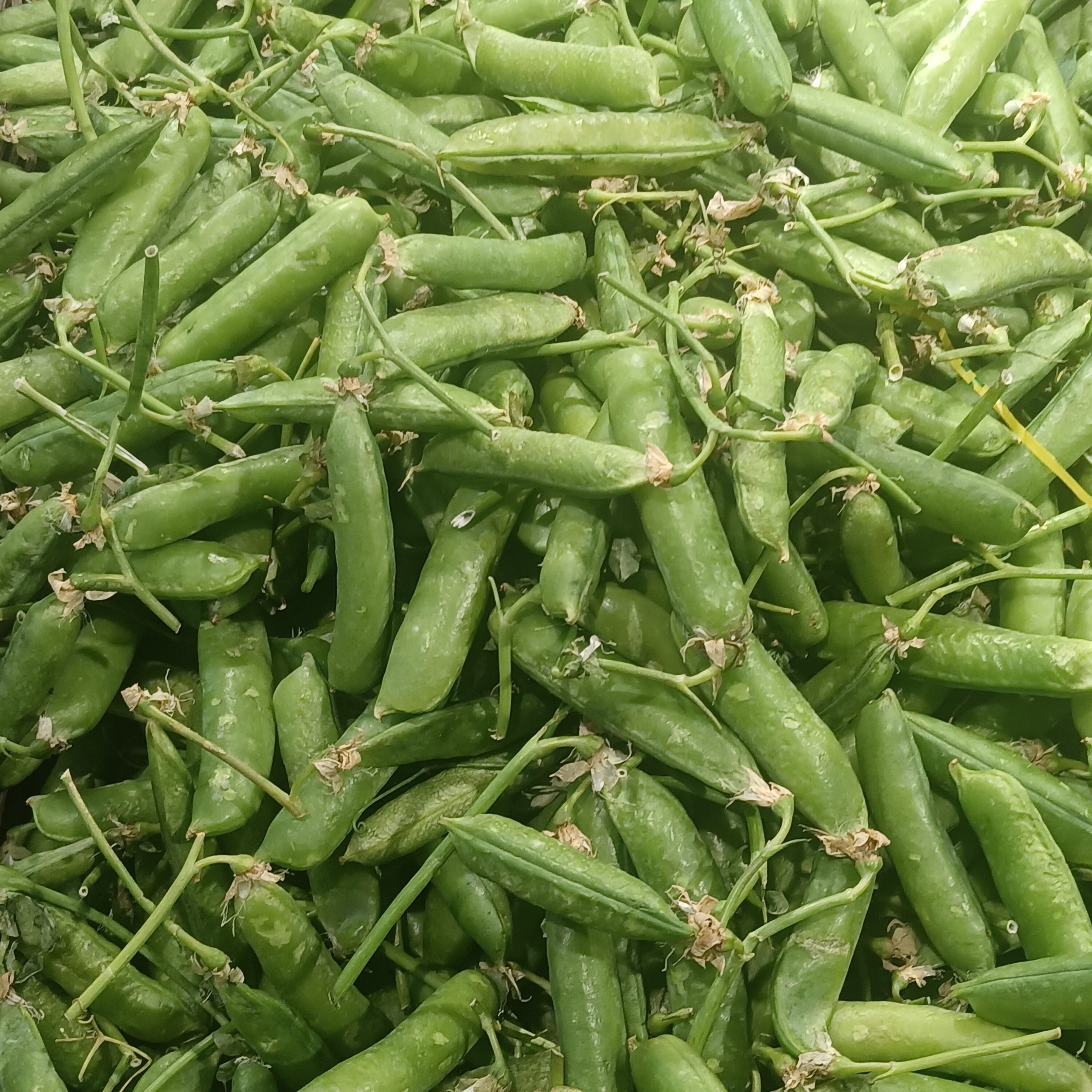
THE FOUNDRY CROP ENCYCLOPEDIA · LEGUMES · COOL-SEASON CROPS
Peas — Growing Guide & Crop Profile
Peas are a cool-season legume that can deliver an early harvest before warm weather takes over. Choose from shelling peas, crisp sugar snaps, and flat snow peas; sow directly into workable soil, provide support where needed, and harvest frequently while pods are tender.
Crop identity
- Scientific name: Pisum sativum (garden pea)
- Family: Fabaceae (legume family)
- Crop type: Cool-season annual legume
- Life cycle: Annual
- Edible portions: Seeds, immature pods in edible-pod types, and tender shoots in some culinary uses
- Propagation: Direct-sown seed
- Pollination: Primarily self-pollinating
Types and choosing varieties
Peas are usually grouped by how they are eaten. All three main garden types share broadly similar growing requirements, but harvest timing and pod characteristics differ.
- Shelling or English peas: The pods become full and rounded; remove the sweet seeds and discard the fibrous pod.
- Snow peas: Harvest the flat, tender pods while the seeds are only slightly developed.
- Sugar snap peas: Eat the crisp pod and developed peas together. Harvest when pods are plump but still tender.
- Dry peas: Certain cultivars are grown to full maturity, dried, and stored for soups and other dishes. Select varieties specifically intended for dry use.
Compare days to maturity, mature vine height, disease resistance, and whether the cultivar is bush or climbing. Short bush types may need little support, but even modest support can improve airflow and make picking easier. Tall or vining types should have a trellis ready at sowing.
Climate, light, and soil
- Season: Cool spring weather is ideal. Peas tolerate light frost, but heat shortens the harvest and can reduce pod quality.
- Temperature: Growth is generally strongest in cool conditions, roughly 55–70°F (13–21°C). Sustained heat, especially above about 80–85°F (27–29°C), can reduce flowering and pod set; cultivar and local conditions matter.
- Light: Full sun is best in cool weather. Light afternoon shade can help in warmer locations but will not fully compensate for hot conditions.
- Soil: Well-drained soil with useful organic matter. Avoid sowing into cold, waterlogged ground where seeds may rot.
- Water: Keep the root zone evenly moist, especially from flowering through pod fill. Avoid waterlogging.
When and how to plant
Peas are normally direct-sown as soon as the soil can be worked without sticking to tools or compacting. Extension recommendations commonly place the minimum soil temperature around 40–45°F (4–7°C), although emergence is slower in colder soil. In many regions, this means planting several weeks before the last average spring frost rather than waiting for frost-free weather.
- Prepare a sunny, well-drained bed and remove large stones or clods.
- Install the trellis before sowing if the variety is tall or climbing.
- Sow seed roughly 1–1½ inches deep, using packet spacing as the final guide. Many home-garden recommendations use about 1–3 inches between seeds.
- Water gently to settle the soil. Keep it moist, not saturated, during emergence.
- Protect new seedlings from birds and other animals if they pull or disturb the seed.
- For a longer spring harvest, sow small successive batches about 7–14 days apart while the weather remains cool.
Spacing, support, and care
Spacing varies with variety and support system. Bush peas can be planted in rows or broad bands; climbing cultivars are usually planted along a trellis or mesh. Follow the seed packet for row and plant spacing, and leave enough room to reach both sides of the support for picking.
Peas form a partnership with soil bacteria that can fix atmospheric nitrogen. They usually need less nitrogen fertilizer than many leafy crops, and excess nitrogen can encourage foliage rather than pods. Use a soil test to guide phosphorus, potassium, and pH adjustments. Where peas have not been grown before, a pea-compatible rhizobium inoculant may help establish that partnership; follow the product label.
Water consistently during flowering and pod development. Weed shallowly to avoid damaging the relatively shallow roots. Trellising improves access, keeps vines off the soil, and can improve airflow. Watch for aphids, pea weevils or seed pests, powdery mildew, and root rots; identify the problem before choosing a control.
Harvest and storage
- Shelling peas: Pick when pods are plump and well-filled, before the peas become starchy. Shell soon after harvest.
- Snow peas: Pick when pods reach their expected length but remain flat and tender, before seeds swell substantially.
- Sugar snaps: Pick when pods are rounded and filled but still crisp and juicy. Taste a pod to judge the best stage.
- Dry peas: Allow pods to mature and dry on the plant, then harvest in dry weather and finish drying thoroughly before storage.
Pick edible-pod peas every couple of days during peak production. Frequent harvest prevents over-maturity and can encourage continued flowering. Cool fresh peas promptly and refrigerate; quality declines quickly after harvest. Shelling peas freeze well after blanching according to tested food-preservation guidance. Do not use untested methods for shelf-stable canning.
Growing peas in different spaces
Acreage and larger gardens
Peas are useful as an early crop before heat-loving vegetables. Plan succession sowings, trellis access, and a quick harvest schedule. Once the crop finishes, healthy plant residues can be composted or incorporated after chopping; allow time for decomposition before planting the next crop.
Suburban beds
A short trellised row can produce a worthwhile fresh harvest in a small footprint. Position the support where it will not shade shorter crops later in the season. Snow and snap peas are especially convenient for frequent picking.
Containers and balconies
Choose compact varieties or use a deep, stable container with a securely anchored trellis for climbing types. Ensure drainage and monitor moisture closely because containers warm and dry faster than garden soil. Protect tall supports from wind and confirm the container is safe for the balcony or deck.
Indoor growing
Peas are generally better suited to outdoor cool-season production than indoor food gardens. Shoots and microgreens can be grown indoors for a short harvest, but producing mature pods requires substantial light, vertical support, root space, and pollination conditions.
Regional adaptation: match the crop to your conditions
There is no single national planting calendar. Use the crop’s days to maturity, local average frost dates, soil temperature, day length, seasonal rainfall, and expected heat or cold to plan sowing and harvest. Local Cooperative Extension guidance and cultivar-specific seed information should take precedence over broad regional rules.
- Northern and short-season climates: Favor appropriately early cultivars, start transplants when suitable for the crop, use succession planning carefully, and protect vulnerable plants from late spring or early fall cold.
- Temperate climates: Use spring and fall planting windows where the crop tolerates cool weather; stagger sowings when this extends harvest without exposing plants to unsuitable heat or cold.
- Hot and humid climates: Account for heat stress, high nighttime temperatures, humidity-related disease, and intense pest pressure. Favor locally proven cultivars, airflow, soil-level irrigation, and seasonal timing that avoids the harshest conditions.
- Hot and dry climates: Plan around water availability, rapid soil drying, high evaporative demand, and heat. Mulch, efficient irrigation, afternoon shade where appropriate, and locally adapted cultivars can improve reliability.
- Mediterranean climates: Mild wet seasons and dry summers may create different planting windows than continental climates. Time establishment around dependable moisture and avoid assuming summer conditions suit every crop.
- High-elevation sites: Treat elevation as a separate factor from latitude. Cold nights, shorter frost-free periods, intense sunlight, wind, slow spring soil warming, slope, and aspect can all affect performance; nearby lowland calendars may not apply.
- Subtropical and tropical climates: Heat, humidity, rainfall patterns, and sometimes day length can shift the best season. In some locations, a crop’s productive window may be the cooler or drier season rather than the local summer.
Before planting, compare the forecast and soil conditions with the crop’s actual requirements. Use frost dates as planning estimates, not guarantees, and adjust for your garden’s microclimate, drainage, exposure, and available protection.
Crop record at a glance
| Category | Cool-season annual legume |
|---|---|
| Scientific name | Pisum sativum |
| Planting method | Direct sow |
| Typical maturity | Often about 50–70 days from sowing; cultivar and weather dependent |
| Sun | Full sun in cool weather; light afternoon shade can help in warmer climates |
| Support | Optional for some bush types; recommended for taller or climbing varieties |
| Container suitability | Good with compact varieties or a securely supported trellis |
| Harvest use | Fresh shelling, edible pods, shoots, or dry peas depending on cultivar |
Sources and further reading
- Colorado State University Extension: Vegetable Garden Hints — planting as soon as soil can be worked, soil temperature, fall sowing, and pea types.
- Colorado State University Extension: Colorado Vegetable Guide — regional growing information, succession sowing, trellising, and mountain-community suitability.
- University of Maryland Extension: Growing Green Peas in a Home Garden — planting, spacing, types, harvest, and storage.
- University of Minnesota Extension: Growing Peas in Home Gardens — cool-season production, harvest timing, and storage.
- Utah State University Extension: How to Grow Peas in Your Garden — support, irrigation, and fertility.
Editorial status: Foundational crop profile. Variety selection, planting windows, spacing, and harvest timing vary by region and cultivar. Regional calendars and variety records will be added as the encyclopedia expands.