
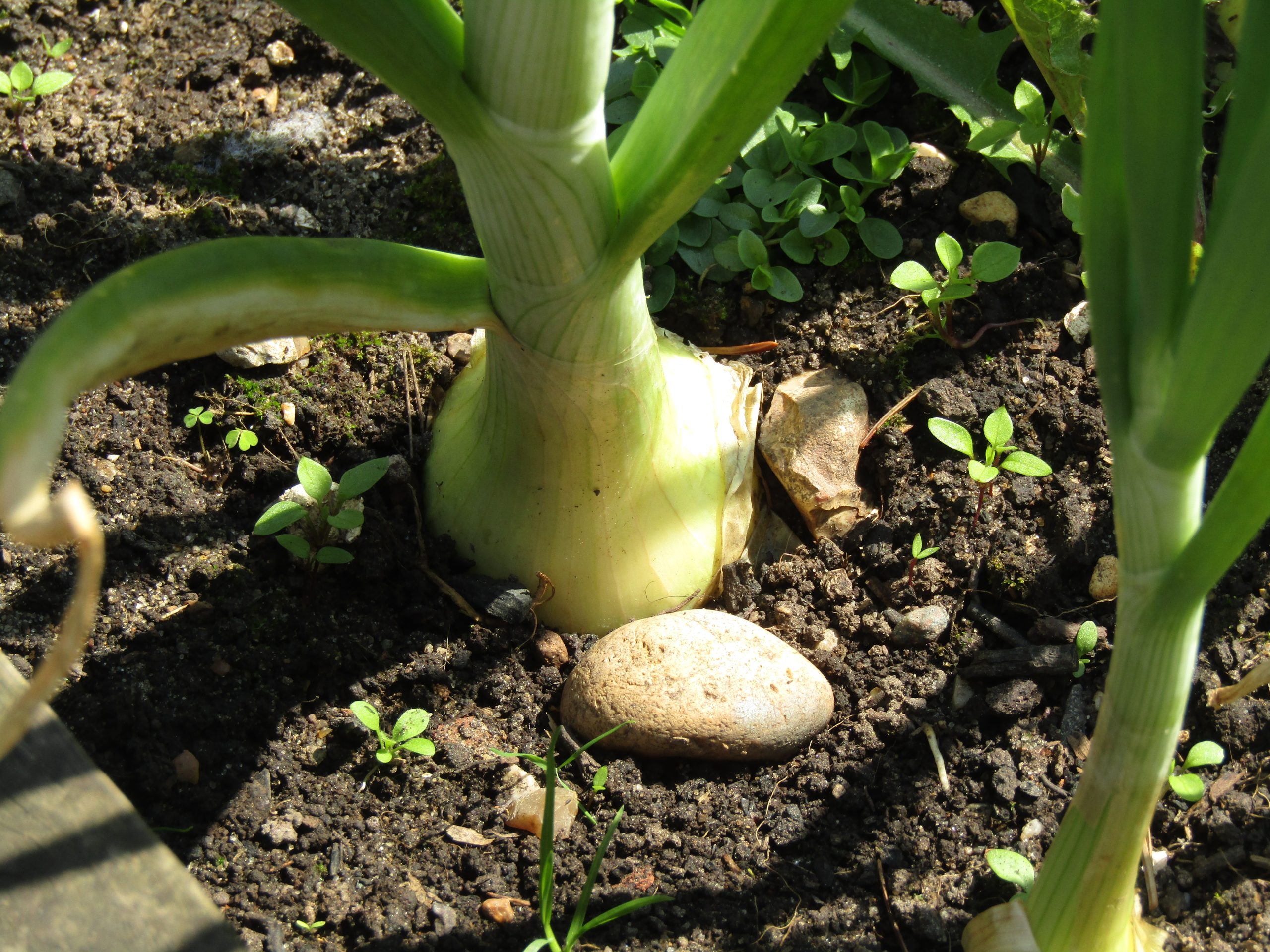
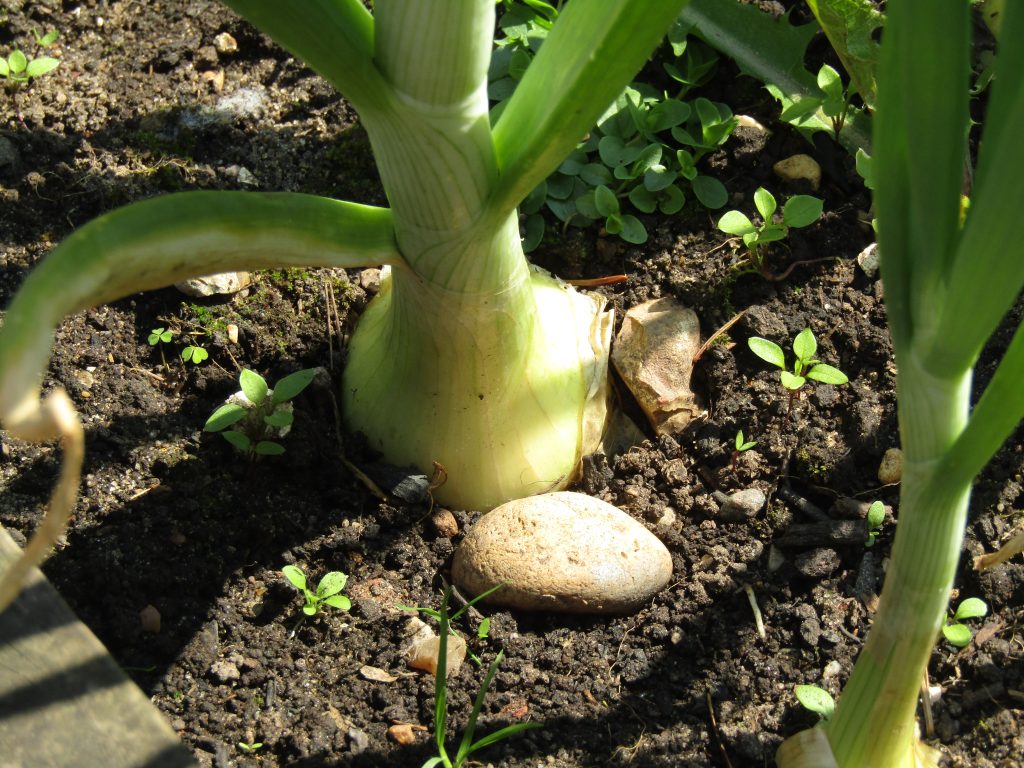
Onions are adaptable cool-season crops, but successful bulb production depends on choosing the right day-length variety for your latitude. Give them sun, fertile well-drained soil, steady moisture, and a long enough growing season, and they can provide both fresh greens and excellent storage bulbs.
Crop identity
- Common name: Bulb onion; garden onion
- Scientific name: Allium cepa
- Family: Amaryllidaceae (formerly often placed in Alliaceae)
- Crop group: Bulb vegetable / allium
- Life cycle: Biennial, usually grown as an annual for bulbs
- Edible parts: Bulbs and green leaves; immature plants are harvested as scallions
- Propagation: Seed, transplants, or sets (small dormant bulbs)
The most important choice: day length
Onions form bulbs in response to day length. A variety that is wrong for your latitude may grow healthy leaves but never make a useful bulb. Buy named cultivars from a supplier that identifies their day-length class.
- Short-day: Begin bulbing at roughly 10–12 hours of daylight. Generally suited to southern latitudes and mild-winter production.
- Intermediate-day: Bulb at roughly 12–14 hours. Often suited to the middle latitudes.
- Long-day: Need roughly 14–16 hours. Generally suited to northern regions with long summer days, including much of the northern United States.
These are broad categories, not exact universal thresholds. Follow the seed supplier’s regional recommendations. For Colorado and much of the northern interior West, long-day onions are usually the starting point for dependable full-size bulbs. Short-day onions often bulb too early and remain small.
Types and varieties
- Yellow storage onions: Often the best all-purpose choice for cooking and longer storage.
- Red onions: Useful fresh or cooked; storage life varies by cultivar.
- White onions: Commonly used fresh and in cooking; many types have shorter storage life.
- Sweet onions: Mild, often higher-moisture types that generally do not store as long as pungent storage varieties.
- Bunching onions / scallions: Selected for edible green leaves and slender stems rather than large dry bulbs.
- Multiplier and perennial onions: Shallots, potato onions, and Egyptian walking onions offer different propagation and harvest habits; treat them as distinct crop profiles.
Climate, site, and soil
- Season: Cool-season crop. Establish plants during cool weather; bulb enlargement follows as day length reaches the cultivar’s requirement.
- Light: Full sun, ideally 6–8 hours or more.
- Soil: Fertile, loose, well-drained loam with good organic matter.
- pH: Approximately 6.0–6.8 is a useful target; soil-test before liming or acidifying.
- Roots: Shallow and easily outcompeted by weeds; avoid deep cultivation near plants.
- Water: Consistent moisture is important during leaf growth and bulb enlargement. Reduce irrigation as tops mature and curing approaches.
Starting onions: seed, transplants, or sets
Seed offers the widest variety choice and is usually economical, but bulb onions need a long season. Start seeds indoors early enough to produce sturdy transplants before the local planting window. Keep seedlings bright and avoid allowing them to become weak and stretched.
Transplants are young plants started from seed by a grower or gardener. Choose healthy, appropriately sized plants and set them out as soon as the soil can be worked and local conditions allow. Avoid badly stressed or oversized transplants.
Sets are small dormant bulbs. They are convenient and simple to plant, but variety choice can be limited and some sets may bolt (send up a flower stalk), especially if they experience unsuitable storage or temperature conditions. Sets are often excellent for green onions and can be useful for bulb production when the cultivar and climate are matched.
Planting and spacing
- Plant seed or transplants early in the season according to local guidance and the cultivar’s day-length class.
- Set transplants so roots are covered and the base is stable; do not bury the neck deeply.
- Plant sets with the pointed end up, generally just below or near the soil surface according to their size and the supplier’s instructions.
- For full-size bulbs, common final spacing is about 4–6 inches (10–15 cm) between plants, with rows 12–18 inches (30–45 cm) apart. Closer spacing produces smaller bulbs or can be used for green onions.
- For scallions, sow in bands or rows and harvest before bulbs enlarge; closer spacing is acceptable.
- Do not hill soil over bulb onions. Keep the shoulders at or just above the soil surface as they enlarge.
Care and fertility
Onions need a steady supply of nutrients, but fertilizer timing matters. Build soil with mature compost and use a soil test to determine additional needs. Nitrogen supports leaf growth, and leaves become the scales of the mature bulb; however, excessive or late nitrogen can delay maturity and reduce storage quality. Follow local Extension recommendations for sidedressing rather than applying a fixed recipe to every soil.
- Keep the bed weed-free, especially during early growth.
- Water evenly; shallow roots make onions sensitive to drought and competition.
- Use a light mulch to reduce weeds and conserve moisture, keeping the bulb necks from staying wet.
- Stop or reduce irrigation as tops naturally yellow and fall, allowing bulbs to mature and dry.
- Rotate away from onions, garlic, leeks, and other alliums for at least three years where practical.
Pests, diseases, and common problems
- Onion thrips: Tiny insects that rasp leaves, causing silvery streaking and reduced vigor. Monitor leaf folds, encourage beneficial insects, and use locally approved controls only when needed.
- Onion maggot / allium leafminer: Larvae damage bulbs or leaves. Crop rotation, prompt removal of infested plants, and properly secured insect-proof row covers can reduce risk; timing is regional.
- Downy mildew and leaf diseases: Improve airflow, avoid prolonged leaf wetness, rotate crops, and remove infected debris.
- White rot: A serious soilborne disease of alliums. Do not move contaminated soil or planting material; avoid planting alliums in affected ground.
- Bolting: Flower stalks can be triggered by plant size and temperature exposure. Bolted bulbs do not store well; harvest and use them promptly.
- Small bulbs: Often caused by incorrect day-length class, late planting, crowding, weeds, shade, or insufficient leaf growth before bulbing begins.
Harvest and curing
Green onions can be harvested once they reach useful size. For dry bulbs, allow plants to mature naturally. Harvest when a substantial proportion of tops have yellowed and fallen over; many Extension guides use roughly half to two-thirds of tops as a practical signal. Do not force the tops down early.
- Loosen soil carefully and lift bulbs without bruising them.
- Move bulbs to a dry, shaded, well-ventilated place. Avoid sunscald during hot weather.
- Cure until necks are dry and outer skins are papery, often about 2–3 weeks depending on conditions.
- Trim tops and roots only after curing; discard damaged or soft bulbs or use them promptly.
Storage and preservation
Storage life depends strongly on cultivar and curing quality. Pungent storage varieties generally keep longer than sweet onions. Store fully cured bulbs in a cool, dry, dark, well-ventilated place. Avoid sealed plastic bags and high humidity, which encourage rot. Inspect periodically and remove sprouting, soft, or moldy bulbs.
Growing in different spaces
Acreage and larger gardens
Plan cultivar choice around latitude and day length first. For storage production, grow a named long-keeping variety, establish a large healthy leaf canopy before bulbing, and cure the crop under cover with good airflow. A simple mesh rack or ventilated shed can handle larger harvests.
Suburban beds
Use a dedicated sunny bed and plant in blocks or rows. Combine a few storage onions with scallions for earlier harvests. Raised beds work well if they do not dry out; shallow-rooted onions need regular moisture and frequent weeding.
Containers and apartments
Scallions and bunching onions are especially practical in containers because they do not require a large bulb. Choose a wide pot or window box with drainage, use quality potting mix, and sow densely for repeated green harvests. Full-size bulb onions need more root volume, reliable light, and cultivar-matched day length; they are possible in large containers outdoors but less space-efficient indoors.
Regional adaptation: match the crop to your conditions
There is no single national planting calendar. Use the crop’s days to maturity, local average frost dates, soil temperature, day length, seasonal rainfall, and expected heat or cold to plan sowing and harvest. Local Cooperative Extension guidance and cultivar-specific seed information should take precedence over broad regional rules.
- Northern and short-season climates: Favor appropriately early cultivars, start transplants when suitable for the crop, use succession planning carefully, and protect vulnerable plants from late spring or early fall cold.
- Temperate climates: Use spring and fall planting windows where the crop tolerates cool weather; stagger sowings when this extends harvest without exposing plants to unsuitable heat or cold.
- Hot and humid climates: Account for heat stress, high nighttime temperatures, humidity-related disease, and intense pest pressure. Favor locally proven cultivars, airflow, soil-level irrigation, and seasonal timing that avoids the harshest conditions.
- Hot and dry climates: Plan around water availability, rapid soil drying, high evaporative demand, and heat. Mulch, efficient irrigation, afternoon shade where appropriate, and locally adapted cultivars can improve reliability.
- Mediterranean climates: Mild wet seasons and dry summers may create different planting windows than continental climates. Time establishment around dependable moisture and avoid assuming summer conditions suit every crop.
- High-elevation sites: Treat elevation as a separate factor from latitude. Cold nights, shorter frost-free periods, intense sunlight, wind, slow spring soil warming, slope, and aspect can all affect performance; nearby lowland calendars may not apply.
- Subtropical and tropical climates: Heat, humidity, rainfall patterns, and sometimes day length can shift the best season. In some locations, a crop’s productive window may be the cooler or drier season rather than the local summer.
Before planting, compare the forecast and soil conditions with the crop’s actual requirements. Use frost dates as planning estimates, not guarantees, and adjust for your garden’s microclimate, drainage, exposure, and available protection.
Crop record summary
| Crop ID (provisional) | VEG-BULB-ALLIUM-CEPA |
|---|---|
| Primary methods | Seed, transplant, or set |
| Season | Cool-season establishment; bulb formation by day length |
| Critical selection factor | Short-, intermediate-, or long-day cultivar matched to latitude |
| Light | Full sun |
| Soil | Fertile, loose, well-drained |
| Typical bulb spacing | 4–6 in (10–15 cm), cultivar dependent |
| Container suitability | Very good for scallions; moderate for bulb onions |
| Storage | Cool, dry, dark, ventilated; cultivar dependent |
References and further reading
- University of Minnesota Extension — Growing Onions in Home Gardens.
- University of Maryland Extension — Growing Onions in a Home Garden.
- University of Illinois Extension — Onion.
- Texas A&M AgriLife Extension — Onions.
- University of Connecticut Extension — Onions.
Editorial note: Day-length classes, planting windows, maturity, storage life, and disease pressure vary by cultivar and region. Confirm variety suitability with local Cooperative Extension and the seed supplier.