
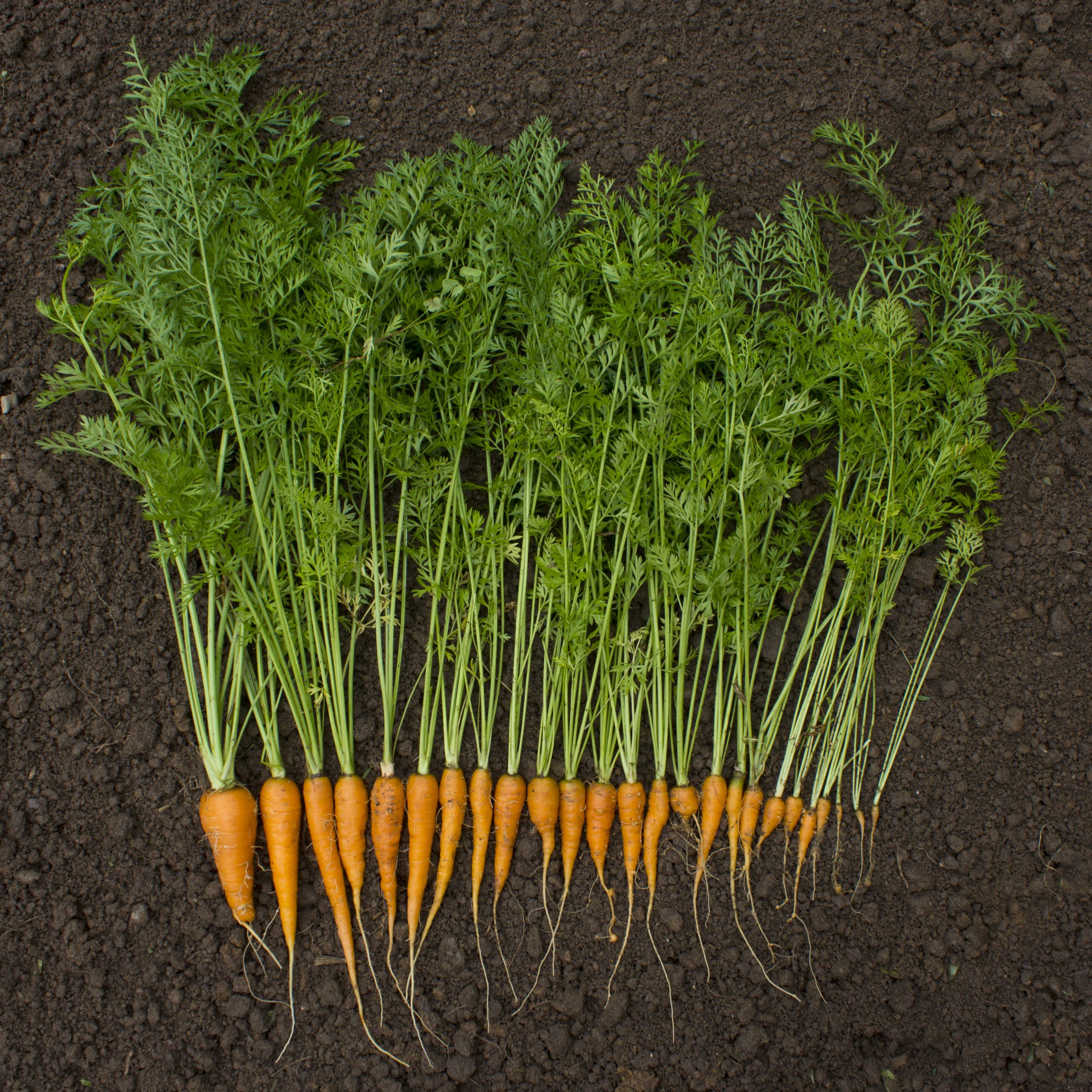
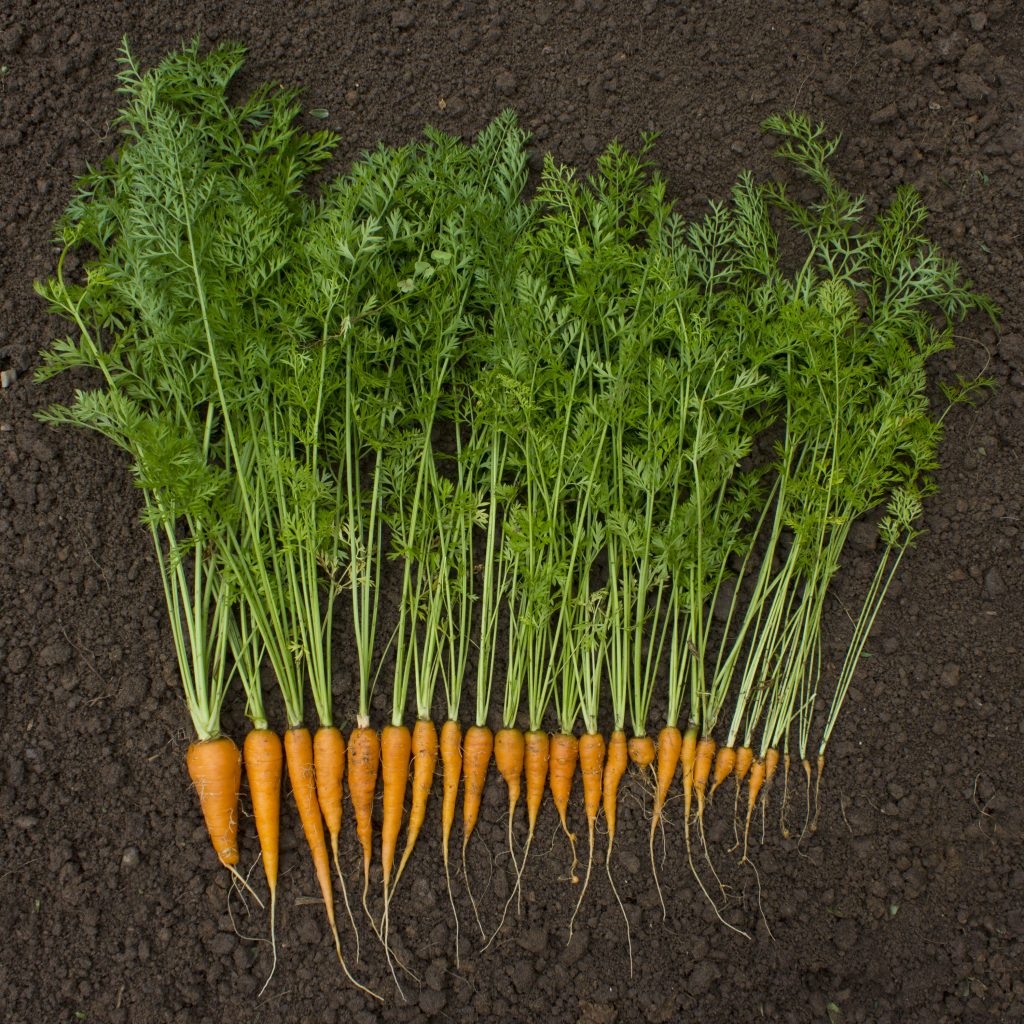
Carrots are a cool-season root crop that reward careful soil preparation, steady moisture, and patient thinning. The edible root develops underground, so the most important growing decisions happen before and just after the seedlings emerge.
Crop identity
- Common name: Carrot
- Scientific name: Daucus carota subsp. sativus (also commonly written Daucus carota var. sativus)
- Family: Apiaceae (carrot or parsley family)
- Crop group: Root vegetable; storage root
- Life cycle: Biennial; normally grown as an annual for its root
- Edible parts: Enlarged taproot and, when young and tender, leaves
- Propagation: Seed; direct sowing is strongly preferred
Varieties and root types
Choose a variety for its mature root shape, days to maturity, intended use, and soil conditions—not color alone. Carrots range from short, round roots to long, tapered storage types, and from orange to purple, yellow, red, and white.
- Nantes: Usually cylindrical with a blunt tip and tender texture; useful for fresh eating and many home gardens.
- Danvers: A tapered, often medium-to-long root type historically valued for adaptability and storage.
- Imperator: Long, tapered roots that need deep, loose soil; common in commercial production.
- Chantenay: Shorter, broad-shouldered roots that can be useful where soil is heavier or depth is limited.
- Round and miniature types: Compact roots suited to shallow beds and containers, though the container still needs enough depth for the selected cultivar.
For a first attempt, choose a dependable variety suited to your soil and season. Check the seed packet for expected mature length and days to harvest; those details should determine bed depth and spacing.
Climate, light, and growing season
Carrots are cool-season crops. They can be sown in early spring as soon as soil is workable and can also be grown as a late-summer or fall crop. Moderate temperatures generally produce better flavor and root quality than sustained heat. Light frosts are usually tolerated, and cool fall conditions can improve sweetness.
- Light: Full sun is preferred; a minimum of about 6 hours of direct light is a practical target. In hot climates, some afternoon shade can reduce heat stress.
- Germination: Slow and sometimes uneven. Depending on soil temperature and moisture, emergence can take roughly 1–3 weeks.
- Soil temperature: Seeds can germinate in cool soil, but emergence is usually more reliable once soil has warmed above about 40–45°F (4–7°C). Excessively warm soil can reduce germination.
- Growing temperature: Roots generally develop best in cool to mild conditions; sustained heat can reduce quality and contribute to bitter or coarse roots.
- Season planning: For fall harvest, count backward from the expected first hard freeze using the variety’s maturity estimate, then add a buffer for slow germination and local conditions.
Soil and bed preparation
Carrots need loose, deep, stone-free soil so the taproot can grow straight. Aim for at least 12 inches (30 cm) of workable soil for ordinary varieties; long-rooted cultivars may need more. Remove rocks, compacted clods, and debris before sowing. Raised beds can make it easier to provide a consistent, friable root zone.
- Texture: Deep, loose sandy loam or friable loam is ideal. Heavy clay can be improved over time with organic matter and careful bed preparation, but short or round varieties may be more reliable than long types.
- Drainage: Keep soil moist but not waterlogged. Poor drainage increases the risk of root and crown problems.
- pH: A slightly acidic to neutral range, approximately 5.5–6.8, is generally suitable; use a soil test to guide amendments.
- Organic matter: Incorporate mature compost where needed to improve structure. Avoid fresh manure and excessive nitrogen immediately before planting; these can contribute to forked, hairy, or misshapen roots.
- Bed preparation: Loosen the full root zone rather than merely scratching the surface. Avoid walking on prepared beds.
Planting and spacing
Carrots are normally direct-sown where they will mature. Their taproots are easily damaged by transplanting, which can cause forked or distorted roots. Sow shallowly, usually about ¼–½ inch (6–13 mm) deep, following the seed packet for the cultivar and soil type.
- Spring sowing: Sow as soon as the soil can be worked and is not saturated. Successive sowings every 2–3 weeks can extend the harvest, provided temperatures remain suitable.
- Fall sowing: Sow early enough for the variety to mature before the ground freezes. In many regions this means roughly 10–12 weeks before the expected first frost, but local climate and cultivar maturity matter.
- Seed spacing: Sow thinly in rows or bands. Tiny seeds are difficult to space accurately; seed tape or pelleted seed can help.
- Row spacing: Commonly 12–18 inches (30–45 cm) between rows, or use a block/band arrangement in raised beds.
- Final plant spacing: Often 1–3 inches (2.5–7.5 cm), depending on cultivar and desired root size. Larger storage carrots need more room.
- Thinning: Thin when seedlings are small, following the cultivar’s spacing recommendation. Snip unwanted seedlings at soil level where possible rather than pulling and disturbing neighboring roots.
Germination is the make-or-break stage. Keep the seed zone consistently moist until seedlings emerge. A light covering of fine compost, vermiculite, or a breathable board temporarily placed over the row can help reduce surface drying; remove any board as soon as seedlings begin to emerge. Do not let the seedbed crust or dry out.
Water, fertility, and routine care
- Water: Maintain even moisture from sowing through root development. Once established, provide roughly 1 inch (25 mm) of water per week from rain and irrigation as a starting point, adjusting for soil, heat, wind, and plant stage. Deep, consistent watering is better than repeated shallow wetting.
- Uneven moisture: Large swings between dry and wet conditions can cause roots to crack or become rough.
- Weeds: Keep the bed carefully weeded, especially while seedlings are small. Carrot foliage is not a strong competitor. Cultivate shallowly to avoid damaging roots.
- Mulch: After seedlings are established, a light organic mulch can conserve moisture and suppress weeds. Keep the root shoulders covered with soil or mulch to prevent greening.
- Fertility: Carrots do not need heavy nitrogen feeding. Base fertilizer decisions on a soil test; excess nitrogen can favor foliage over roots and contribute to poor root form.
- Rotation: Rotate with unrelated crop families and avoid repeatedly growing carrots or other Apiaceae in the same bed. A three-year or longer rotation is a useful general target where space allows.
Common pests, diseases, and growing problems
- Carrot rust fly / carrot root fly: Larvae tunnel into roots. Use fine insect-proof row cover from sowing where the pest is present, secure edges, and rotate planting locations. Local pest timing varies.
- Wireworms and root-feeding larvae: Can scar or tunnel roots, especially in recently converted grassy ground. Use crop rotation, bed preparation, and local Extension guidance for identification.
- Leaf blights and leaf spots: Avoid prolonged leaf wetness, provide airflow, rotate crops, and remove badly affected plant debris. Confirm the cause before choosing a treatment.
- Forked or twisted roots: Commonly associated with stones, clods, compacted soil, root injury, or transplanting.
- Small roots and excessive tops: Often related to crowding, excessive nitrogen, shade, or unsuitable temperatures.
- Green shoulders: Exposed root tops develop green coloration and may taste bitter. Keep shoulders covered with soil or mulch.
- Cracked roots: Often follow irregular watering or sudden heavy rain after a dry period.
- Failure to emerge: Check seed age, sowing depth, soil crusting, drying, and temperature before assuming seed is nonviable.
Use integrated pest management: identify the problem, monitor its timing and severity, prevent recurrence through rotation and barriers, and use only locally appropriate controls according to label directions.
Harvesting
Harvest when roots reach the size and flavor you want; carrots do not need to be left until every root reaches its maximum size. Many varieties mature in roughly 55–80 days, but cultivar, temperature, soil, and growing conditions can shift that range considerably. The shoulders are a useful guide to root diameter.
- Water the bed the day before harvest if the soil is dry.
- Loosen soil alongside the row with a garden fork, taking care not to spear the roots.
- Pull gently by the crown; do not yank hard against compacted soil.
- Harvest selectively to leave smaller roots growing, or clear the bed when the crop is mature and weather requires it.
- For fall crops, mulch before the ground freezes if you intend to harvest roots in place. This is climate-dependent; do not rely on in-ground storage where soil freezes deeply or rodents are a problem.
Curing, storage, and preservation
Carrots are not cured like onions or winter squash. Remove the leafy tops promptly because they draw moisture from the roots. Handle roots gently and keep them cool and humid.
- Short-term: Refrigerate topped roots in a bag or covered container that limits moisture loss while allowing appropriate food-safe handling.
- Long-term: Ideal storage is near 32°F (0°C) with very high relative humidity, roughly 90–95%, without freezing. A well-managed root cellar or refrigerator can work.
- Preparation: Brush off loose soil and keep roots from drying. For home storage, wash before use unless the storage method specifically calls for clean, fully dried roots.
- Preservation: Carrots can be frozen after suitable preparation, fermented, dehydrated, or pressure-canned using a tested recipe. Low-acid vegetables require pressure canning; do not use a boiling-water canner for plain carrots.
Growing carrots in different spaces
Acreage and larger gardens
Use a dedicated, deeply prepared bed with consistent irrigation. Larger plantings benefit from a calibrated seeder or seed tape, precise thinning, and planned succession sowings. Avoid placing carrot beds immediately after sod or grass where wireworms may be more troublesome. For storage production, choose cultivars bred for uniformity and keeping quality.
Suburban backyard and raised beds
Carrots are well suited to raised beds when the soil is deep and loose. Sow in short rows or wide bands, thin carefully, and stagger sowings to avoid a single large harvest. Keep the bed evenly watered; raised beds can dry faster than in-ground soil.
Apartment and container growing
Choose round, miniature, or short-rooted cultivars for containers. Use a container with drainage holes and enough depth for the selected variety—about 8–12 inches (20–30 cm) is a practical starting range for short types, while longer cultivars need deeper containers. Fill with a loose, fine-textured potting mix, sow directly, thin to the packet spacing, and water consistently. A wide container is often more productive than a narrow, deep pot. Carrots need strong light; a bright outdoor balcony is generally easier than growing them indoors under ordinary room lighting.
Regional adaptation: match the crop to your conditions
There is no single national planting calendar. Use the crop’s days to maturity, local average frost dates, soil temperature, day length, seasonal rainfall, and expected heat or cold to plan sowing and harvest. Local Cooperative Extension guidance and cultivar-specific seed information should take precedence over broad regional rules.
- Northern and short-season climates: Favor appropriately early cultivars, start transplants when suitable for the crop, use succession planning carefully, and protect vulnerable plants from late spring or early fall cold.
- Temperate climates: Use spring and fall planting windows where the crop tolerates cool weather; stagger sowings when this extends harvest without exposing plants to unsuitable heat or cold.
- Hot and humid climates: Account for heat stress, high nighttime temperatures, humidity-related disease, and intense pest pressure. Favor locally proven cultivars, airflow, soil-level irrigation, and seasonal timing that avoids the harshest conditions.
- Hot and dry climates: Plan around water availability, rapid soil drying, high evaporative demand, and heat. Mulch, efficient irrigation, afternoon shade where appropriate, and locally adapted cultivars can improve reliability.
- Mediterranean climates: Mild wet seasons and dry summers may create different planting windows than continental climates. Time establishment around dependable moisture and avoid assuming summer conditions suit every crop.
- High-elevation sites: Treat elevation as a separate factor from latitude. Cold nights, shorter frost-free periods, intense sunlight, wind, slow spring soil warming, slope, and aspect can all affect performance; nearby lowland calendars may not apply.
- Subtropical and tropical climates: Heat, humidity, rainfall patterns, and sometimes day length can shift the best season. In some locations, a crop’s productive window may be the cooler or drier season rather than the local summer.
Before planting, compare the forecast and soil conditions with the crop’s actual requirements. Use frost dates as planning estimates, not guarantees, and adjust for your garden’s microclimate, drainage, exposure, and available protection.
Crop record summary
| Crop ID (provisional) | VEG-ROOT-DAUCUS-CAROTA-SATIVUS |
|---|---|
| Primary method | Direct sow |
| Season | Cool season; spring and fall in many climates |
| Light | Full sun; partial afternoon shade may help in hot regions |
| Soil | Deep, loose, stone-free, well-drained |
| Typical sowing depth | ¼–½ in (6–13 mm) |
| Typical final spacing | 1–3 in (2.5–7.5 cm), cultivar dependent |
| Approximate maturity | Often 55–80 days; check cultivar information |
| Container suitability | Good with short/round cultivars and adequate depth |
| Storage | Near 32°F (0°C), high humidity; keep tops removed |
References and further reading
- University of Maryland Extension — Growing Carrots in a Home Garden.
- Utah State University Extension — How to Grow Carrots in Your Garden.
- University of Minnesota Extension — Growing Carrots and Parsnips in Home Gardens.
- Colorado State University Extension — Colorado Vegetable Guide.
- Colorado State University Extension — Colorado Carrots.
- Iowa State University Extension — Growing Carrots and Parsnips.
Editorial note: This profile provides general guidance. Cultivar descriptions, sowing dates, spacing, pest pressure, and storage life vary by region and growing conditions. Use local Cooperative Extension recommendations and the seed supplier’s cultivar-specific instructions when they differ from broad ranges given here.